As an Amazon Associate, we earn from qualifying purchases. Some links may be affiliate links at no extra cost to you. Although our opinions are based on curated research, we haven't used these products. Articles generated with AI.

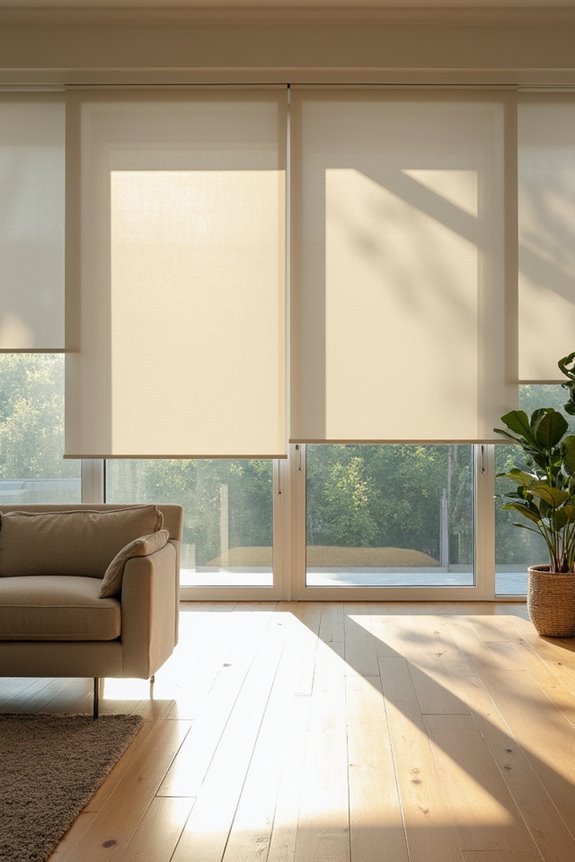
What Materials Are Used In Roller Shades?

Roller shades are crafted from various materials, each with unique advantages. Common options include durable polyester blends that offer high UV blockage, and vinyl-polyester composites suitable for commercial spaces. For soft residential uses, polycotton blends are popular, while blackout fabrics provide total darkness. Eco-friendly choices like bamboo are also available. Depending on functionality, we can select fabrics for light filtration, complete darkness, or solar control. Discover more about these options and their benefits below.
Key Takeaways
- Roller shades are commonly made from polyester and PVC blends due to their high durability and UV blockage capabilities.
- Polycotton blends offer a balance of strength and softness, making them ideal for residential use.
- Vinyl-polyester composites excel in durability and cleaning ease, suitable for commercial settings.
- Fabrics like faux silk deliver a luxurious feel but are not recommended for high-humidity areas.
- Eco-friendly options such as bamboo and organic cotton contribute to sustainability and energy efficiency.
Common Fabric Compositions in Roller Shades

You may be interested
Common Fabric Types:
- Polyester and PVC Blends: Offering high durability, these fabrics withstand weather conditions and provide up to 99% UV blockage.
- Polycotton Blends: With 80% polyester, these shades combine strength and softness, making them suitable for residential use.
- Vinyl-Polyester Composites: These blends are excellent for both durability and ease of cleaning, ideal for commercial environments.
- Faux Silk Blends: These luxurious fabrics, while aesthetically appealing, perform better in moderate environments, not ideal for high-humidity spaces. Energy efficiency is an important factor to consider when choosing materials for roller shades, as some fabrics can help reduce heating and cooling costs.
Choosing the right fabric guarantees both functional and decorative qualities for your roller shades.
Recommended Products

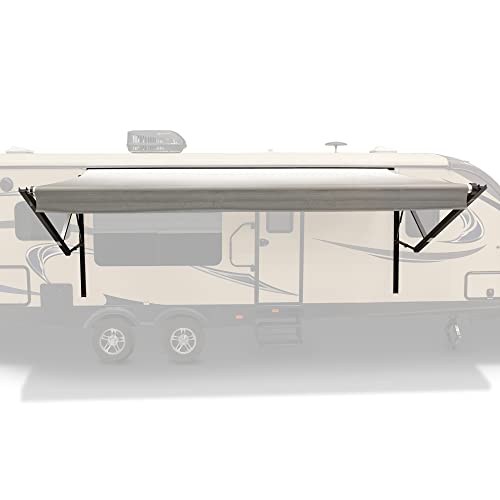
𝗠𝗢𝗧𝗢𝗥𝗜𝗭𝗘𝗗 𝗢𝗨𝗧𝗗𝗢𝗢𝗥 𝗦𝗛𝗔𝗗𝗘: This beautiful and convenient shade is perfect for any exterior space where you need extra shade and privacy. The high quality fabric blocks up to 95% of harmful sun rays while letting the air pass so you can cool off on hot days. Automatically and easily opens and closes with a touch of a button

15' by10' HIGH-QUALITY STANDARD: 15feet long 10feet width Awning Backed with a 1 years warranty and certified CE, GS, and RoHS, this awning is built and tested to be simple to use and durable to last. Residential and commercial use. Most accurate fully extend product dimension: 14.6'x9.84'.
Types of Roller Shade Fabrics by Function

Understanding the types of roller shade fabrics by function allows us to choose options that best meet our needs for light control and privacy. Each fabric serves a unique purpose.
Light Filtering Fabrics
These fabrics diffuse light while reducing glare, perfect for living rooms or offices seeking balanced light and privacy.
Blackout Fabrics
Ideal for bedrooms or media rooms, they provide complete darkness and maximum privacy.
Solar Fabrics
These options reduce solar heat and UV rays, suitable for spaces with large windows, offering energy efficiency.
Sheer Fabrics
Thin and transparent, sheer fabrics allow natural light while maintaining outside views, often used with blackout options for versatility.
Natural Fabrics
Eco-friendly options, like cotton or bamboo, enhance interior aesthetics but might not block light as effectively. Additionally, many roller shades are made from durable materials that contribute to energy efficiency and thermal insulation features.
Recommended Products

1. **Hurricane Resistance**: Hurricane Shutters Slat, end locking design to resist hurricanes

Premium quality: the robust and anodised aluminium of the roller shutters together with the coated fibreglass fabric ensures resistance to sunlight, scratches and moisture.

Premium quality: the robust and anodised aluminium of the roller shutters together with the coated fibreglass fabric ensures resistance to sunlight, scratches and moisture.
Performance Characteristics of Roller Shade Materials

In considering roller shade materials, it’s essential to evaluate their performance characteristics, as these directly influence functionality and aesthetic appeal. Different materials deliver various levels of light filtration, greatly impacting indoor lighting and glare. For instance, sheer fabrics let in natural light while maintaining privacy, whereas blackout materials block light entirely, perfect for bedrooms.
Moreover, solar screen fabrics effectively reduce UV rays and heat gain without limiting visibility. Durability is also key; PVC and polyester options offer moisture resistance and easy cleaning, making them suitable for areas like kitchens. Finally, by focusing on fabric sustainability, we can choose materials that not only perform well but also contribute positively to our environment. Additionally, many roller shades provide thermal insulation which enhances energy efficiency in home environments.
Recommended Products

PREMIUM QUALITY: The robust and anodised aluminium of the shutters, together with the coated fibreglass fabric, ensures resistance to sunlight, scratches & moisture.

【Upgrade No Drill Roller Blinds】No drill no tools no brackets to Install.Light blocking roller shades for windows Install in 20 seconds without window frame holes. Freely remove without wall damage. Easy to install blinds ideal for renters, landlords, and home buyers

PREMIUM QUALITY: The robust and anodised aluminium of the shutters, together with the coated fibreglass fabric, ensures resistance to sunlight, scratches & moisture.
Environmental and Maintenance Aspects

The environmental and maintenance aspects of roller shades are essential for making informed choices that protect our planet while guaranteeing long-lasting functionality.
Sustainability Benefits
Opting for eco-friendly materials like bamboo or organic cotton helps lower pollution and contributes to energy efficiency. These shades reduce heating and cooling demands, leading to a smaller carbon footprint. Additionally, choosing products with FSC Certification ensures responsible sourcing of materials, further promoting sustainability.
Maintenance Tips
To extend the lifespan of our roller shades, we should regularly clean them with a damp cloth, avoiding harsh chemicals. Durable fabrics like polyester blends resist fading and wear, which reduces waste over time. Additionally, choosing shades with recyclable materials guarantees better disposal options.
Common Fiber Types in Roller Shade Construction

Roller shades are crafted from various fiber types, each contributing unique attributes to their function and appearance. The most common materials include polyester and polyester blends, known for their fiber durability and light-blocking capabilities. For blackout shades, these fibers often feature vinyl or PVC backing, ensuring complete light blockage.
In light-filtering shades, woven polyester provides moderate durability, while natural fibers like cotton can enhance fiber aesthetics with a soft texture. Sheer fabrics, made from ultra-thin polyester yarns, allow for high light transmission and maintain privacy. Additionally, eco-friendly synthetic blends are becoming popular, offering both sustainability and diverse design options. Together, these fiber choices help create shades that suit various preferences and functional needs. Moreover, incorporating high-quality burlap fabrics can add a rustic touch to window treatments, enhancing the overall aesthetic of a space.
Recommended Products

【Premium Sun Shade Fabric】Yoolax outdoor blind is made of premium 3% openness fabric to enhance outdoor comfort. It can not only filter light and block 99% harmful UV rays effectively, but also windproof, waterproof and fire-prevention. With the stainless wire guide system, the wind resistance of these motorized outdoor shades reach level 5, making it a perfect choice for porch, pergola, and patio.

2 Power Options Available – Hardwired or Solar Powered Rechargeable Choose the power solution that fits your space. The hardwired version offers continuous power, while the solar-powered rechargeable option provides cordless convenience with no wiring required—ideal for outdoor use.

【IMPORTANT INFORMATION】:☆1. Please be sure to accurately measure and calculate your customized size. A set of outdoor windproof blinds is very valuable and heavy (about 6.5KG per square), and the international transportation fee is very high. No return is accepted unless there are special circumstances. Please consider carefully before purchasing。
Special Fabric Treatments and Coatings
While roller shades are primarily valued for their appearance and functionality, various special fabric treatments and coatings greatly enhance their performance.
Recommended Products

【𝐒𝐈𝐙𝐄 𝐈𝐍𝐅𝐎】Inside mount for widths of 44.5-44.8 inches. Requires a 2-inch minimum frame depth for inside mount. 【𝐍𝐎 𝐃𝐑𝐈𝐋𝐋...
Coating Technologies
Coating technologies like PVC increase UV resistance and waterproofing, making shades more durable against sun damage and weather elements.
Treatment Benefits
Antimicrobial treatments, such as Microban®, inhibit growth of bacteria, mold, and mildew, promoting better indoor hygiene.
Solar control coatings help reduce cooling costs by adjusting solar heat gain while protecting interiors from UV rays.
Furthermore, opacity coatings can either block all light for privacy or filter it for softer illumination. Additional functional coatings include waterproofing for stain resistance, flame retardant treatments for safety, and scratch resistance for longevity in high-traffic areas. These treatments guarantee our roller shades remain both attractive and practical, providing lasting benefits. Additionally, many roller shades come with 100% blackout features that create an insulating barrier against heat and cold.
Frequently Asked Questions
How Do I Choose the Right Roller Shade Fabric for My Space?
Choosing the right roller shade fabric can feel like finding a needle in a haystack! We should consider fabric durability and light filtration to create the perfect blend of style, privacy, and functionality for our space.
Can I Customize Roller Shade Fabric Colors and Patterns?
Yes, we can customize roller shade fabric colors and patterns! With current fabric trends, we’ll enjoy a wide array of options for pattern selection, allowing us to truly tailor our shades to reflect our style.
What Are the Typical Costs of Roller Shade Materials?
Did you know premium motorized roller shades can exceed $1,200 each? When we compare materials, basic options start around $23, illustrating how material pricing varies widely in our search for the perfect shade solutions.
Are There Sustainable Options for Roller Shade Fabrics?
Yes, there are sustainable options for roller shade fabrics. We can choose from eco-friendly fabrics, like those made from organic cotton, ensuring we promote healthier homes while reducing our impact on the environment.
How Can I Measure Windows for Roller Shade Installation?
To measure windows for roller shades, we need precise window dimensions using a metal tape measure. Let’s check the width and height at multiple points, ensuring we account for any obstructions or irregularities.