As an Amazon Associate, we earn from qualifying purchases. Some links may be affiliate links at no extra cost to you. Although our opinions are based on curated research, we haven't used these products. Articles generated with AI.

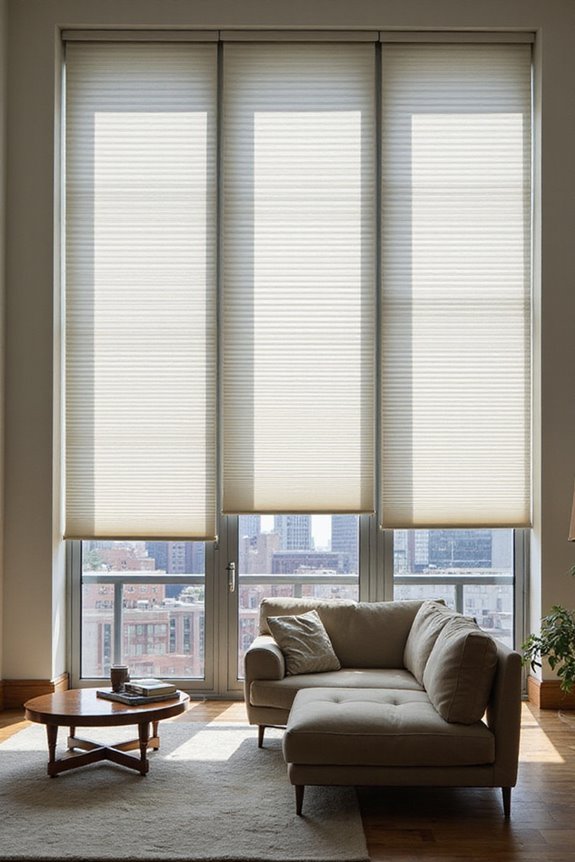
What Are The Most Energy Efficient Window Treatments For Apartments?

When it comes to energy-efficient window treatments for apartments, we should consider options like cellular shades and thermal Roman shades. Cellular shades feature a honeycomb design that offers excellent insulation, potentially saving 15-20% on heating and cooling costs. Thermal Roman shades also provide good light control and insulation. Heavy drapery and exterior shades can further enhance energy savings by blocking drafts and solar heat. For a deeper understanding of these options, we can explore additional details and benefits.
Key Takeaways
- Cellular shades feature a honeycomb design that provides superior thermal insulation, with potential energy savings of 15-20%.
- Thermal Roman shades offer good light control and enhance insulation, reducing heating energy use significantly.
- Heavy drapery, particularly with thermal-lining, effectively traps heat and minimizes air leaks, improving energy efficiency.
- Exterior shades and awnings can significantly lower cooling costs by blocking solar heat, reducing reliance on air conditioning.
- Basic blinds and DIY insulated window treatments are cost-effective options that still contribute to energy efficiency in apartments.
The Importance of Energy Efficiency in Apartments

You may be interested
As we consider the significance of energy efficiency in apartments, it’s clear that this approach has both environmental and financial benefits. By adopting sustainable practices, we can considerably lower our energy consumption. Apartments typically use less energy than detached houses, thanks to shared walls and better thermal containment.
The use of effective insulation materials is essential in reducing heat loss, enhancing overall efficiency. The average apartment consumes about half the energy of a detached home, which directly translates to lower greenhouse gas emissions. Energy-efficient upgrades can reduce our energy bills by about 13%, making a noticeable difference in our monthly expenses. Overall, focusing on energy efficiency not only makes financial sense but also supports environmental sustainability in urban areas. Additionally, the installation of insulated curtains can lead to significant energy savings by blocking heat loss during winter and minimizing heat gain in summer.
Overview of Window Treatment Options

When we look at various window treatment options, it’s important to understand how each type can enhance energy efficiency in our apartments.
Thermal Roman Shades are excellent insulators, using thick, layered fabrics to reduce heat transfer. They provide good light control, especially in winter.
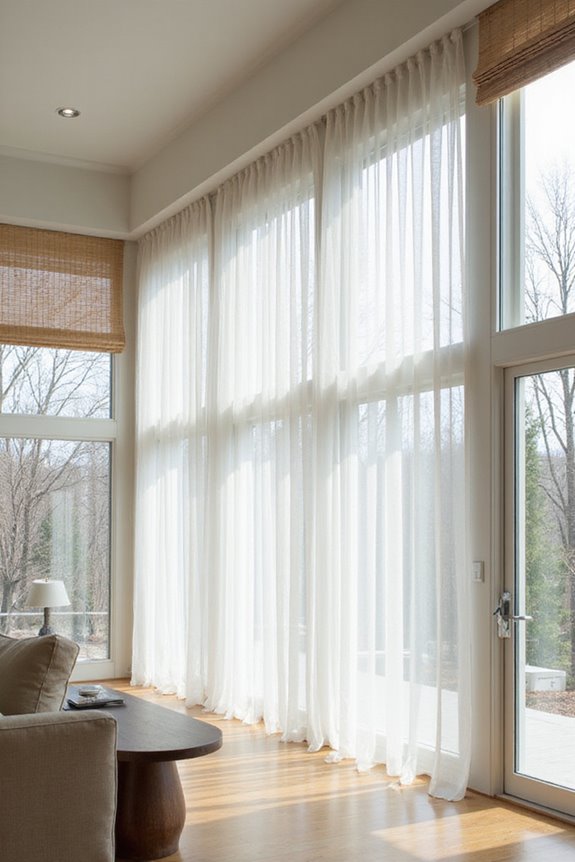
Drapery adds an extra insulating layer, utilizing medium to dark-colored fabrics that block sunlight, reducing heat gain during summer.
Exterior Shades and Awnings block solar heat before it reaches the glass, greatly lowering cooling costs.
Blinds offer moderate insulation with adjustable light control but may be less effective for energy savings.
Lastly, Insulated Window Panels and Shutters can drastically improve insulation, offering R-values of up to 4 or more, especially useful with different fabrics and layering techniques. Additionally, insulated window treatments help lower energy bills year-round, maintaining comfortable indoor temperatures.
Benefits of Cellular Shades
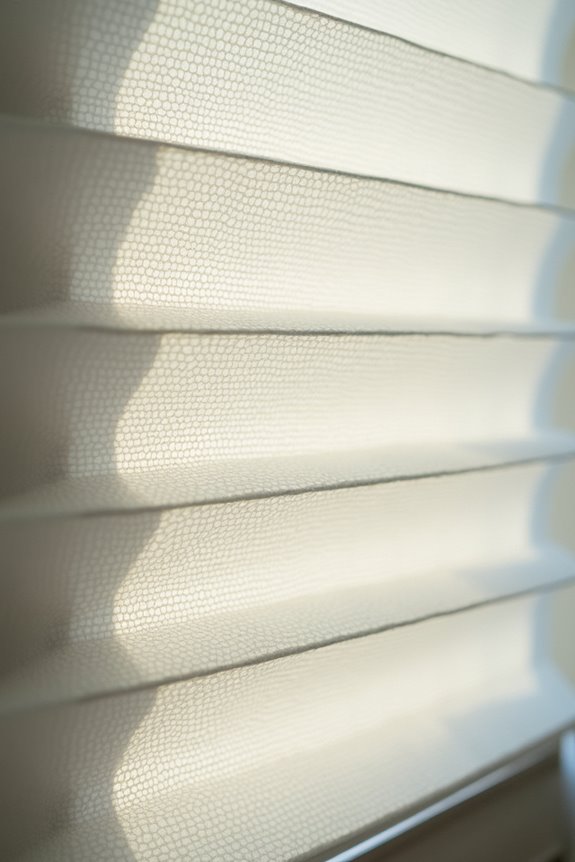
While many window treatments provide some level of insulation, cellular shades stand out for their exceptional energy efficiency and comfort-enhancing qualities. These shades are designed with a honeycomb structure that traps air, providing superior thermal insulation compared to traditional blinds. We can expect energy savings of 15-20% for heating and cooling costs when using cellular shades. Moreover, studies show they reduce heating energy use by up to 36% compared to having no shades at all. During winter, the shades minimize heat loss, while in summer, they effectively block solar heat gain. By enhancing our indoor comfort, cellular shades not only save energy but also reduce the need for constant HVAC adjustments, making them a smart choice for any apartment. Additionally, thermal insulation efficiency is a key factor in selecting window treatments, ensuring optimal performance in energy conservation.
How Drapery Enhances Energy Efficiency

Drapery can considerably enhance energy efficiency in apartments, offering a versatile solution for managing indoor climates throughout the year. The thermal benefits of drapery insulation help keep our spaces comfortable. Utilizing heavy fabrics like velvet or thermal-lined cotton can trap heat effectively, reducing energy loss in winter. We should consider the color of our drapes too; dark colors absorb heat while light colors reflect it. Additionally, energy-saving blackout curtains can further enhance thermal insulation and provide excellent light blocking capabilities.
Proper installation plays a significant role. Floor-length drapery can block cold drafts, and extending them beyond window frames minimizes air leaks. Closing drapes during winter nights retains warmth, whereas keeping them shut in summer blocks unwanted heat. By adjusting our drapery seasonally, we can optimize insulation and improve energy savings throughout the year.
The Role of Thermal Roman Shades

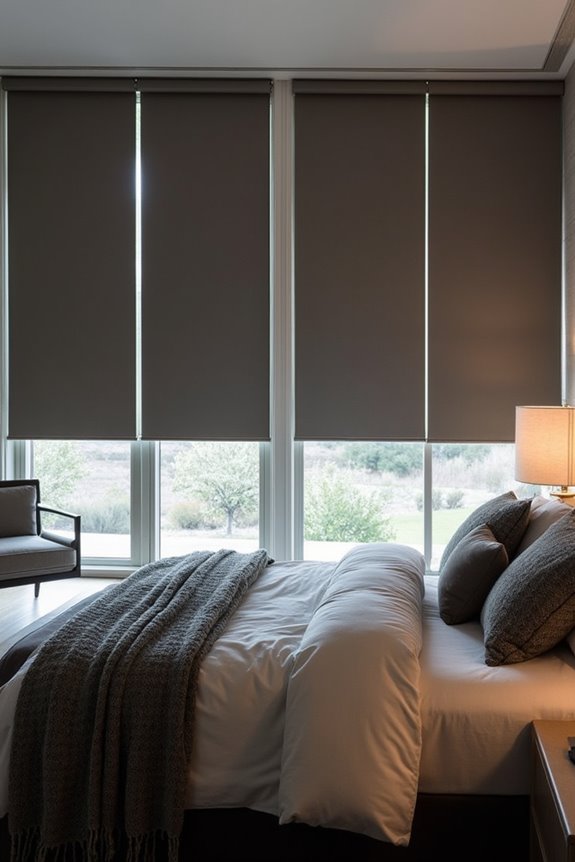
Though many may overlook window treatments, thermal Roman shades play a significant role in enhancing energy efficiency in our apartments. Their heavy fabrics, such as velvet, improve thermal performance, reducing heat loss during colder months. The layered design creates air pockets that trap warmth, acting as a barrier against the cold.
Additionally, reversible Roman shades allow us to reflect or absorb heat based on the season, striking an aesthetics balance. By drawing shades during sunny days, we can let natural solar heat warm our interiors and conserve energy. Installing side guides further blocks airflow, optimizing insulation. Overall, thermal Roman shades not only enhance comfort but also help lower heating costs by maintaining a stable indoor temperature throughout the year. These shades are particularly effective when paired with blackout curtains benefits, ensuring maximum light control and energy efficiency.
Understanding Exterior Shades and Awnings
Exterior shades and awnings are essential components for improving the energy efficiency of our apartments. They provide several awnings benefits, primarily through effective shading strategies. By reducing solar heat gain, retractable awnings can lower indoor temperatures, cutting cooling energy use by up to 77%. This is especially useful in hot climates, where energy savings can range from 17% to over 70%. Adjustable awnings offer the flexibility to adapt to changing sunlight and temperature, maximizing energy efficiency while allowing natural light in. Additionally, they protect against UV rays, helping prevent fading of our furnishings. Overall, incorporating exterior shades helps us manage energy consumption and enhance our comfort, making a significant impact on our apartment living experience. Moreover, using energy-efficient window treatments in conjunction with exterior shades can further optimize thermal insulation and reduce energy bills.
Louvered Blinds: Versatility and Insulation
Louvered blinds are a practical choice for apartment dwellers seeking a balance between light control and energy efficiency. Their adjustable slats allow us to control natural light and airflow, optimizing our indoor comfort.
By changing the slat positioning, we can block direct sunlight in summer, reducing solar heat gain. In winter, tilting the slats can help maximize passive solar heating, cutting down our heating costs.
Although louvered blinds only provide moderate insulation, they do considerably aid in reducing energy reliance when used effectively. Materials like wood or composite improve their insulative properties, but they still range lower than other options like cellular shades. Ultimately, louvered blinds combine functionality in light control with an achievable level of energy efficiency.
Window Film and Glazing Treatments Explained
When it comes to improving energy efficiency in our apartments, window film and glazing treatments offer significant advantages. Window film benefits include enhanced insulation, which reduces our energy demands for heating and cooling. For instance, EnerLogic window film can elevate the performance of single-pane glass to match that of dual-pane options.
Glazing options, such as low-emissivity coatings, improve thermal performance as well. Window films can block a substantial amount of solar heat while allowing natural light to filter in, creating a comfortable living environment. Choosing the right film involves balancing visible light transmission with solar heat gain coefficients, ensuring we maintain daylight and comfort. Overall, these treatments are valuable for actively improving our apartments’ energy efficiency.
Comparing Energy Efficiency Ratings
As we explore energy efficiency ratings for window treatments, it’s essential to understand how these ratings impact our choices. The R-value is key, indicating thermal resistance, with higher values signifying better insulation. For instance, cellular shades typically reach R-values around 4, while high-quality shutters can reach up to 10.
When selecting treatments, consider those made from sustainable materials, which not only enhance energy efficiency but also support eco-friendly living.
Conducting energy audits can give us insights into how well our window treatments perform.
For ideal results, we should focus on products that trap air layers effectively. This way, we can make informed choices that contribute to energy savings while maintaining comfortable indoor temperatures throughout the year.
Pairing Treatments for Maximum Insulation
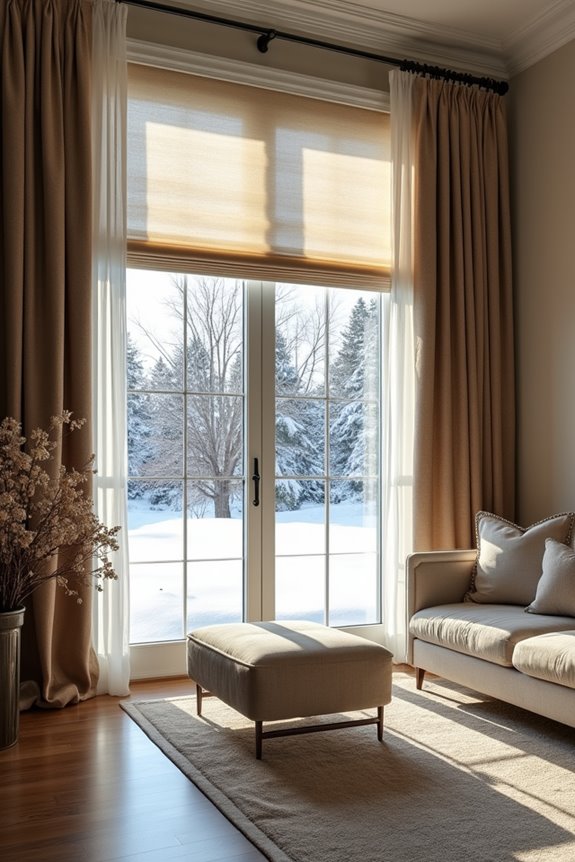
Maximizing insulation can greatly enhance our apartment’s energy efficiency. One effective approach is using layering strategies to combine window treatments. For instance, pairing cellular shades with heavy draperies creates a robust barrier against heat loss. Cellular shades trap air and reduce heat transfer notably, while draperies provide additional insulation techniques.
We should also consider tight fitting designs that seal gaps around window edges to trap air. Combining shades with shutters offers a solid insulation layer that blocks airflow. Using double or triple cellular shades further improves our R-value, reducing heat transfer effectively. Finally, seasonal adjustments—like using reflective drapes in summer—modulate insulation needs and enhance our energy savings throughout the year.
Light Control and Privacy Considerations
Effective light control is essential not only for enhancing the comfort of our living spaces but also for maintaining privacy. We can achieve this through various energy-efficient window treatments that offer effective light filtration and privacy management.
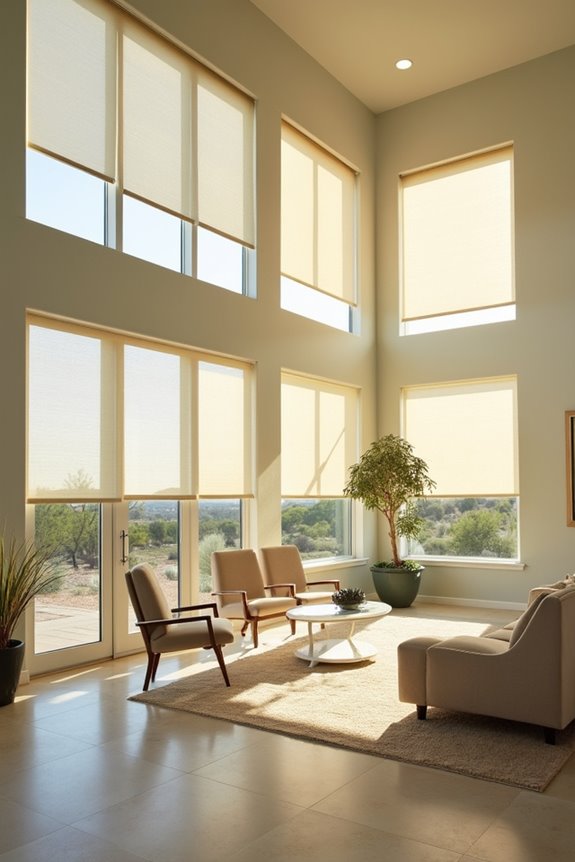
For instance, cellular shades allow us to control sunlight precisely, offering top-down, bottom-up options that maintain privacy while letting light in. Solar shades come in different openness levels, balancing our need for daylight with outdoor visibility. Roman shades provide adjustable privacy, letting us control sight lines without darkening a room entirely. By layering treatments, like drapery combined with cellular shades, we can enhance both privacy levels and insulation. These options make it easier for us to find the ideal balance between light and seclusion.
Cost-Effective Solutions for Energy Savings
When it comes to creating a comfortable living environment, we can achieve substantial energy savings through cost-effective window treatments. Budget-friendly options like basic blinds start at around $30 per window, while DIY projects can further cut costs. For instance, insulated Roman shades or thermal panels can be made from recycled materials for as little as $10 to $50.
Layering these DIY solutions with existing curtains can enhance insulation, trapping air and reducing heat transfer. Additionally, plastic glazing films provide an inexpensive way to boost window insulation. While cellular shades and insulated shutters might have higher upfront costs, they often lead to significant savings on utility bills through improved energy efficiency. It’s wise to contemplate these cost-effective solutions for lasting benefits.
Tips for Selecting the Right Window Treatments
Selecting the right window treatments involves a balance between style, functionality, and energy efficiency. To begin, it’s crucial to contemplate various material types that offer insulation properties, like cellular shades or heavier drapes. These options can greatly reduce energy loss.
Next, we should match the color schemes of our window treatments to the overall decor, ensuring they complement our living space. For example, light colors reflect sunlight, while darker hues absorb heat.
Additionally, layering treatments can enhance insulation. Pairing cellular shades with medium-to-heavy weight drapes creates a thermal barrier, optimizing energy savings. Finally, contemplate adjustable options, like top-down bottom-up shades, which maintain energy efficiency while letting in natural light. By making informed choices, we can enhance both comfort and aesthetics in our apartments.
Maintenance and Care for Energy-Efficient Options
Maintaining our energy-efficient window treatments is crucial for guaranteeing they continue to perform effectively. Regular window treatment maintenance helps to preserve their insulating properties and prolong their lifespan.
Routine Cleaning
We should dust or vacuum our treatments frequently to prevent dust buildup. For deeper cleaning, mild soap and lukewarm water are best.
Inspections
Inspecting for mold in humid areas is essential. Checking moving parts and the condition of seals can enhance energy efficiency care.
Material-Specific Needs
Different materials have unique care requirements. For instance, real wood blinds need careful cleaning to avoid warping, while faux wood is easier to maintain.
Preventative Measures
Applying weatherstripping before seasonal changes and washing removable fabrics regularly helps prevent allergens and energy loss. Taking these steps guarantees our window treatments remain effective.
Case Studies: Real-Life Energy Savings
Understanding the effectiveness of energy-efficient window treatments can often be best illustrated through real-life case studies. For instance, low-E storm windows retrofit reduced air leakage by 10%, leading to an 18% reduction in whole-building gas usage during heating seasons. Similarly, automated insulating shades cut energy consumption by 25% over ten months, showcasing significant energy-saving measurements.
Energy-efficient blackout shades led to 25% lower energy bills in a New York City apartment, improving comfort levels throughout the year. Finally, Zola Thermo Clad windows maintained a consistent indoor temperature without heating, underscoring impactful real-life innovations. These case studies clearly demonstrate how thoughtful window treatments can transform apartment energy efficiency, delivering both savings and comfort.
Frequently Asked Questions
What Are R-Values and Why Are They Important for Window Treatments?
R-values measure insulation effectiveness in window treatments, determining heat flow resistance. Their significance lies in reducing energy costs and enhancing comfort, making them essential for our energy efficiency goals and sustainable living choices in apartments.
How Do Window Treatments Impact Indoor Air Quality?
Window treatments remarkably affect indoor air quality by minimizing indoor air pollutants and enhancing ventilation effectiveness. By selecting the right materials and ensuring proper installation, we can create healthier living environments in our homes.
Can Energy-Efficient Window Treatments Reduce Noise Levels Effectively?
Yes, energy-efficient window treatments can effectively reduce noise levels. Their acoustic insulation properties enhance noise reduction, creating a serene environment while also improving thermal performance and comfort in our apartments. We’ve experienced significant benefits ourselves!
What Materials Are Best for Environmentally Friendly Window Treatments?
We’ve found that sustainable fabrics, like organic cotton and bamboo shades, make excellent environmentally friendly window treatments. They not only enhance aesthetics but also contribute to reducing our environmental footprint while maintaining effective insulation.
How Can I Measure the Effectiveness of My Current Window Treatments?
To measure our window treatments’ effectiveness, we can track indoor temperature fluctuations and monitor HVAC energy consumption, evaluating energy savings and thermal performance. This helps us identify gaps and optimize insulation for better efficiency.