As an Amazon Associate, we earn from qualifying purchases. Some links may be affiliate links at no extra cost to you. Although our opinions are based on curated research, we haven't used these products. Articles generated with AI.


What Are The Best Window Treatments For Energy Efficiency In Cold Climates?

When considering the best window treatments for energy efficiency in cold climates, we recommend a few effective options. Cellular shades trap air, enhancing insulation and reducing heat loss. Roller shades with reflective coatings can bounce heat away from windows, while layered heavy fabric draperies create a snug fit that retains warmth. Plantation shutters also act as a solid barrier against drafts. Exploring combinations of these treatments can yield even greater energy savings. Let’s look closer at each type.
Key Takeaways
- Cellular shades offer superior insulation, reducing heat loss by up to 40% in winter, making them ideal for cold climates.
- Roller shades with reflective coatings can significantly lower heat loss by 45-55%, enhancing energy efficiency during chilly months.
- Layered and heavy fabric draperies trap air for better insulation, improving heat retention and comfort in cold weather.
- Plantation and Normandy® shutters provide an effective thermal barrier, reducing drafts and heat transfer by up to 51% when closed.
- Combining external solar shades with other treatments enhances insulation and minimizes cold drafts, increasing overall indoor comfort.
Cellular Shades (Honeycomb Shades)

You may be interested
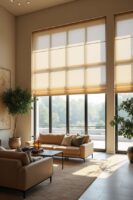


When it comes to energy efficiency, cellular shades, also known as honeycomb shades, stand out as an excellent option for homeowners looking to improve their insulation. Their unique design traps air within honeycomb cells, creating a barrier that reduces heat loss by up to 40% in winter months. This leads to significant energy savings, with studies showing up to a 24% reduction in heating energy compared to traditional blinds.
Key cellular shade benefits include:
- Enhanced thermal insulation.
- Elimination of gaps that allow drafts.
- Options for blackout fabric that block sunlight.
Proper installation is essential for maximizing these benefits, as shades need to fit snugly within the window frame to prevent heat leakage, ultimately supporting an energy-efficient home. Additionally, many honeycomb shades feature user-friendly installation processes that allow homeowners to set them up quickly and easily.
Roller Shades With Reflective Coatings
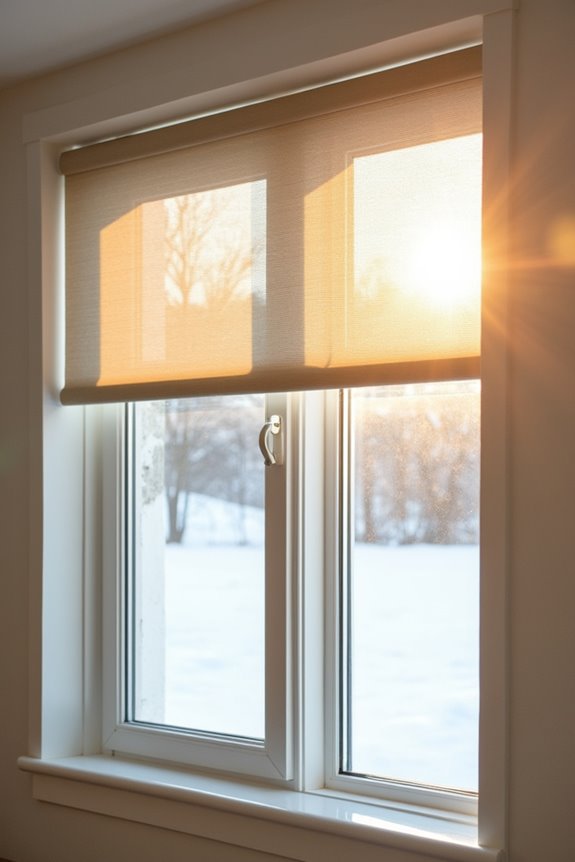
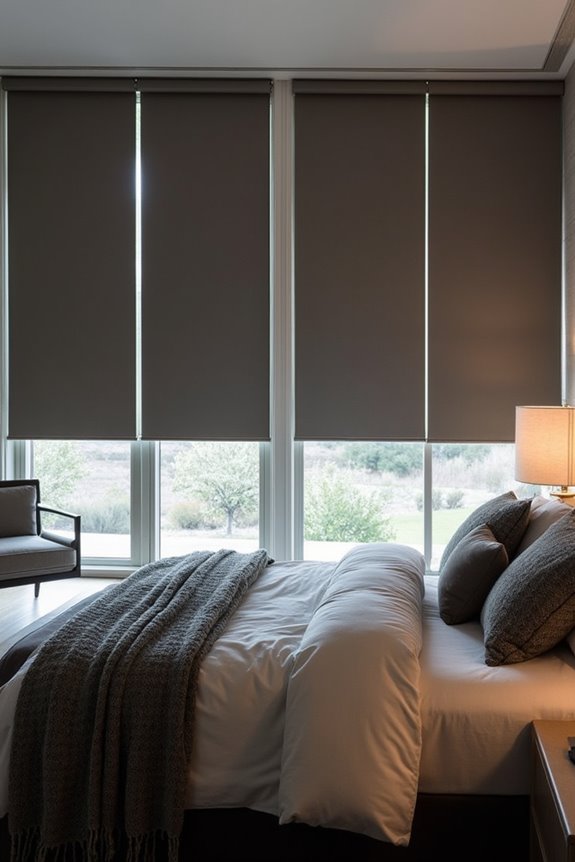
As we explore options for enhancing energy efficiency in our homes, roller shades with reflective coatings emerge as a practical choice. These shades are designed with reflective coatings on the inward-facing side, effectively bouncing heat away from windows. This helps maintain warmth in winter and reduce heat gain in summer.
The reflective coatings benefits are significant. They can lower heat loss by about 45-55% on single-glazed windows. Additionally, they reduce air conditioning runtime by 3–5 hours daily in the summer, leading to energy savings potential of up to 25% on cooling bills. Choosing energy-efficient window blinds can significantly enhance your home’s comfort and savings.
Layered and Heavy Fabric Draperies
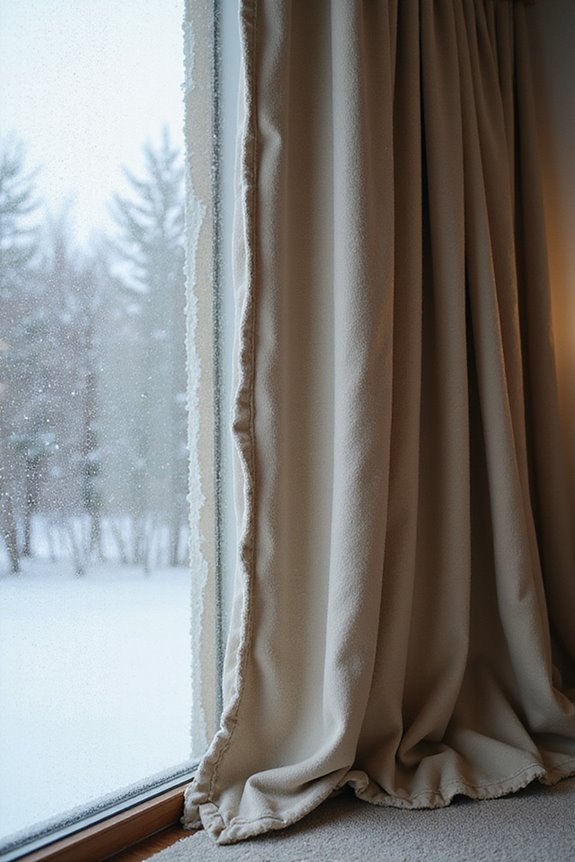
Layered and heavy fabric draperies offer an effective solution for enhancing energy efficiency in our homes while also providing aesthetic appeal. The benefits of layered drapery greatly boost our insulation by trapping air between fabrics. Heavy fabric options, such as velvet or wool, improve heat retention and reduce energy costs during winter. Insulated drapes with specialized linings can enhance thermal resistance, making them superior to standard heavy fabrics.
Additionally, we can maximize effectiveness by ensuring draperies fit snugly against window frames, reducing drafts. Layering heavier drapes with blackout curtains allows for better heat retention and noise reduction. Overall, investing in layered and heavy fabric draperies yields both comfort and energy savings, making them an excellent choice for cold climates. Furthermore, insulated window treatments help lower energy bills year-round, maintaining comfortable indoor temperatures and improving overall home comfort.
Plantation and Normandy® Shutters

Plantation shutters are renowned for their impressive energy efficiency, making them a top choice for homeowners seeking to enhance their living spaces. Constructed from durable shutter materials like wood or engineered polymers, these shutters create a solid thermal barrier. When closed, they form an almost airtight seal, greatly reducing drafts and heat transfer.
Key benefits include:
- Up to 51% less heat loss through windows.
- Adjustable louvers that optimize light and airflow.
- Patented weatherstripping to minimize air seepage. Additionally, plantation shutters improve energy efficiency in large windows by providing light control and privacy.
Solar and Exterior Shades

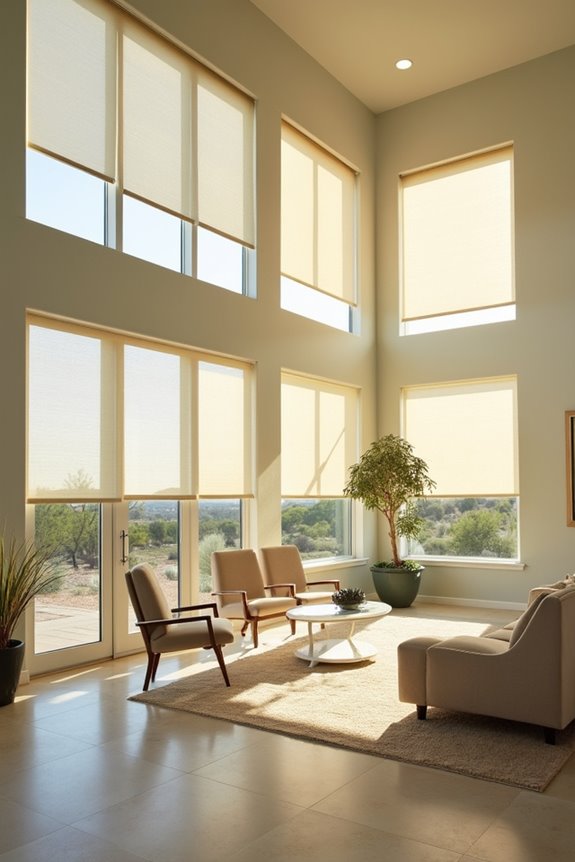
Solar and exterior shades offer another effective solution for enhancing a home’s energy efficiency, especially in the face of varying seasonal temperatures. These shades create an insulating barrier at windows, reducing heat loss while allowing natural light to enter. One of the key solar shade benefits is their ability to minimize cold drafts, contributing to greater indoor comfort. Additionally, combining these shades with thermal insulation efficiency can significantly improve overall energy savings during colder months. When considering exterior shade installation, we should note that placing these shades outside intercepts solar energy before it reaches the glass, improving thermal control. However, it’s important to remember that solar shades alone may not provide peak insulation during harsh winters. They often work best when layered with additional treatments, like blackout shades, for enhanced warmth and energy efficiency.
Installation and Best Practices for Insulation
When we’re considering installation methods and best practices for insulation, it’s crucial to recognize that proper techniques can greatly enhance energy efficiency in our homes. Choosing the right insulation material is critical. For instance, fiberglass or wood/composite window frames offer better insulation than metal frames.
To guarantee effective thermal window installation, we should aim for a tight fit by using shims and expanding foam insulation. It’s also important to use triple weather stripping to prevent drafts.
For glazing, triple-pane windows featuring Low-E coatings reduce heat loss considerably. Last, incorporating thermal window treatments like honeycomb shades or thick curtains can further improve insulation, especially if they’re sealed tightly to the window frame. These steps collectively optimize our window insulation efforts, including the use of insulating window treatments that can significantly reduce energy costs.
The Importance of Window Insulation and Weather Stripping
Achieving energy efficiency in our homes goes beyond just proper insulation methods; it also involves understanding the importance of window insulation and weather stripping. Effective window insulation can cut heat loss considerably, sometimes improving insulation performance by up to 52%. By adding insulating panels, we can slow indoor temperature drops, enhancing our thermal comfort during cold winters.
Weather stripping plays a critical role in sealing windows. Properly installed weather stripping can reduce air leaks, minimizing cold drafts and lowering heating demands. Using durable materials, like silicone, guarantees long-lasting airtight seals. Regular inspection and replacement of weather stripping help maintain its effectiveness. Together, window insulation and effective weather stripping maximize energy efficiency, providing a comfortable home environment in chilly climates.
Combining Window Treatments for Maximum Efficiency
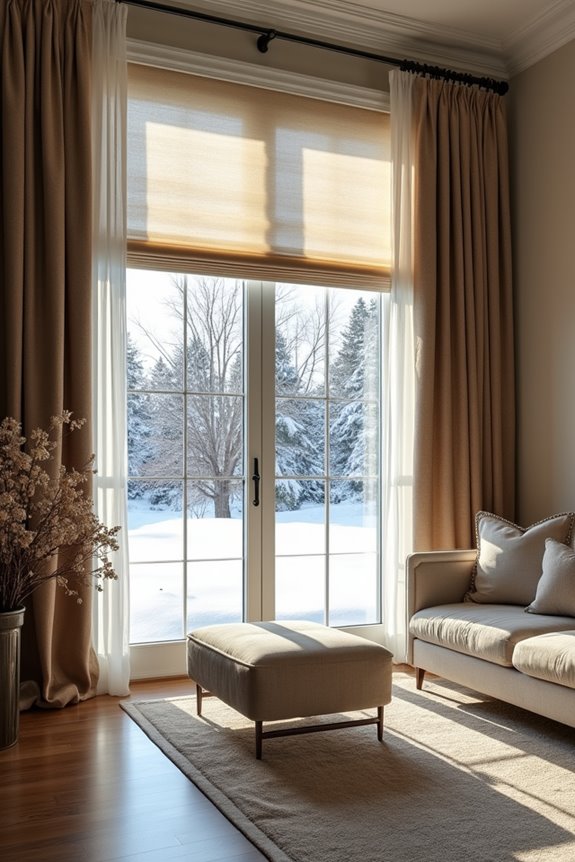
Combining various window treatments can greatly enhance our home’s energy efficiency, especially during colder months. By layering treatments, we can notably boost thermal resistance and improve insulation. For instance, pairing cellular shades with drapery adds an insulating layer that can decrease heat loss by up to 10%.
We can also consider dual-layer systems, like top-down bottom-up shades, which provide flexibility while maintaining warmth. Additionally, using thick, durable fabrics for our drapes or Roman shades guarantees lasting protection against winter wear.
Incorporating exterior treatments, such as shutters, alongside interior shades can further reduce cold air infiltration. This layered approach not only improves energy efficiency but also allows for light control and privacy, enhancing our living spaces.
Frequently Asked Questions
How Much Energy Can Window Treatments Save in Winter?
Like winter’s cloak, proper window treatments can greatly enhance energy savings, boosting winter efficiency. We’ve seen reductions of up to 60% in heat loss, transforming our homes into cozy sanctuaries while cutting energy bills.
Are There Tax Incentives for Energy-Efficient Window Treatments?
Yes, there’re tax credits and energy rebates available for energy-efficient window treatments. We should check federal and local programs, as they often change, ensuring we can maximize our savings on eligible products for our homes.
Can I Install Window Treatments Myself for Energy Efficiency?
When life gives you challenges, we tackle them head-on! Yes, we can absolutely do DIY installation for most treatment materials, ensuring energy efficiency and saving costs if we’re careful with measurements and instructions.
How Often Should Window Treatments Be Cleaned for Optimal Performance?
We should clean our window treatments based on their materials and environment. Generally, a cleaning frequency of every 6-12 months is ideal, with more frequent dusting in high-traffic areas to maintain peak performance.
What Are the Signs of Poor Window Insulation Affecting Energy Efficiency?
We can spot signs of poor window insulation by noticing drafty windows, feeling temperature fluctuations, or seeing condensation between panes. Using quality insulating materials can improve comfort and energy efficiency, helping us save on bills.