As an Amazon Associate, we earn from qualifying purchases. Some links may be affiliate links at no extra cost to you. Although our opinions are based on curated research, we haven't used these products. Articles generated with AI.


What Are The Best Window Treatments For Noise Reduction?

To reduce noise effectively, we recommend several window treatments. Acoustic or soundproof curtains can absorb sound while cellular shades offer great noise dampening. Heavy drapes and layered curtains provide additional sound barriers, and window inserts can considerably cut down noise as well. Don’t forget about sealing gaps with weatherstripping to further minimize sound infiltration. These solutions combine aesthetics with functionality, making your space more peaceful. We’ll explore more options and tips for achieving quieter environments.
Key Takeaways
- Acoustic curtains made from heavy fabrics can absorb sound, reducing noise by up to 29 decibels, enhancing privacy and comfort.
- Cellular (honeycomb) shades provide over 50% noise reduction and thermal insulation with air pockets that trap sound and improve energy efficiency.
- Heavy drapes and layered curtains, crafted from thick materials like velvet, effectively block external noise while adding a rich aesthetic to interiors.
- Window inserts can decrease noise levels by up to 70%, especially for single-pane windows, and are easy to install without permanently altering structures.
- Sealing and weatherstripping around windows create airtight barriers, minimizing noise infiltration and boosting overall effectiveness of other soundproofing treatments.
Acoustic/Soundproof Curtains

You may be interested
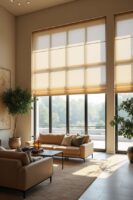


When it comes to reducing noise in our homes or workplaces, acoustic or soundproof curtains can be an effective solution. These curtains use heavy, dense fabrics that help absorb sound and reduce internal echoes. Made from various acoustic materials, such as quilted fiberglass or thick polyester blends, they can decrease sound transmission by up to 29 decibels. For easy installation, we can use included hardware like mounts or grommets, making them suitable for both rentals and permanent spaces. Acoustic curtains are also beneficial for enhancing privacy, improving sleep quality, and even providing thermal insulation. While they contribute to soundproofing, remember that pairing them with additional techniques, like wall insulation, can enhance their effectiveness considerably. Additionally, many soundproof curtains feature blackout lining to improve sound dampening capabilities.
Recommended Products

SPECS - Length: 96" | Width: 80" | Material: Cotton and Polyester with Zig-Zag Stitching | Weight: 12 lbs each | Blanket and Thread Color: Black | Use: Sound Absorption, NOT Sound Blocking or Sound Proofing | NRC Rating: 0.35 | Quantity: (60) Sound Blankets

✅[ NOT YOUR TRADITIONAL MLV ] - See, feel and hear the difference. The enhanced flexibility of Soundsulate Flex makes it a versatile material for addressing various soundproofing challenges in different surroundings. This material is so flexible that some may think of it as a fabric.

Blocks out Lights - If you're tired of the bright lights of day, Block Out Curtains can help you sleep during the day and still enjoy a late-night viewing experience. If you work a night shift and need to sleep during the day, these curtains are the perfect solution to block light and darken the room significantly. They can be used not only in homes where an area is used for both sleeping and entertaining, but also in homes with separate TV rooms with complete home theatre sets.
Cellular (Honeycomb) Shades

Cellular shades, also known as honeycomb shades, offer an innovative solution for reducing noise in our homes and workplaces. Their unique cellular design features multiple air pockets that trap air, creating a sound-dampening barrier. This construction can reduce noise by over 50%, making them more effective than traditional blinds.
Benefits Overview:
- Dual functionality: cellular shades provide noise reduction and temperature insulation.
- They improve acoustic comfort by lowering ambient noise levels.
- Users report notable noise improvement, especially in busy urban areas. Additionally, insulated curtains can further enhance the overall soundproofing and energy efficiency of your space.
For best performance, it’s important to guarantee proper fit and installation, sealing gaps around the edges. These shades also work well with other treatments, enhancing soundproofing for a quieter environment.
Recommended Products

【Please Note】&【Support Customization】❶Fabric width will be 0.16" shorter than the size of the headrail. Our blinds can be used for either inside mount or outside mount. You will also receive an installation guide, installation hardware and for more size options of this same blinds. Pls feel free to MSG us if there are any questions.❷You can also click the "Customized" option to make customization by yourself.

[Size Kind Reminder] Width: We will cut 3mm(1/8in)by default when producing the product size you choose to ensure a perfect fit with the size you choose.Make sure the depth of the window frame is ≥ 2.4 inches. For instructions on the measurement process, please refer to picture in the main product gallery or contact us

[Size Kind Reminder] Width: We will cut 3mm(1/8in)by default when producing the product size you choose to ensure a perfect fit with the size you choose.Make sure the depth of the window frame is ≥ 2.4 inches. For instructions on the measurement process, please refer to picture in the main product gallery or contact us
Heavy Drapes and Layered Curtains

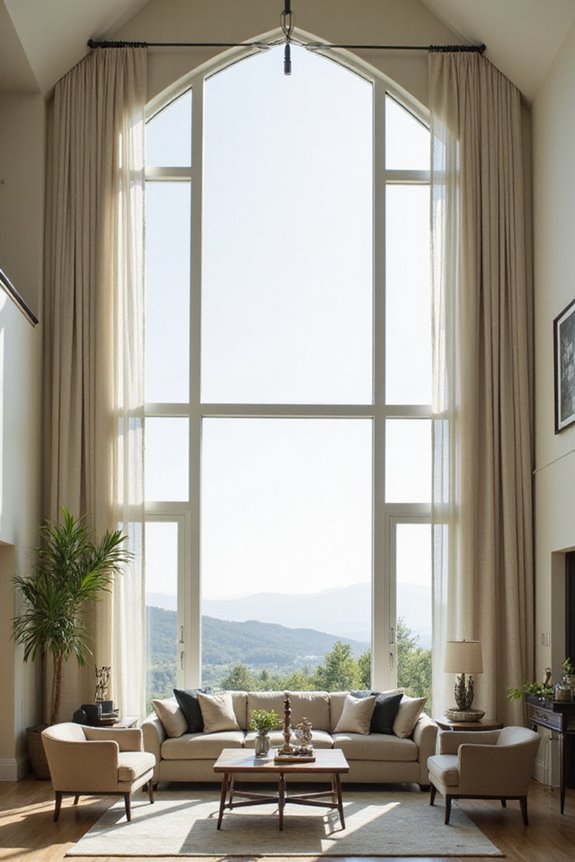
Heavy drapes and layered curtains represent an effective method for improving noise reduction in our living spaces, particularly in bustling urban environments. These treatments use heavy fabric like velvet and tightly woven materials to absorb sound energy. The thickness of the drapes acts as a barrier against noise, particularly from traffic and neighbors.
Layered designs enhance this effect by combining multiple fabric layers, trapping sound waves between them. Some options even include mass-loaded vinyl for additional soundproofing. It’s essential to install these curtains properly, ensuring they cover the entire window space to prevent sound leakage. Additionally, they offer benefits such as thermal insulation, improved privacy, and low-maintenance cleaning, making them a practical choice for any room. Heavy fabrics also contribute to energy efficiency by reducing heat loss, which can further enhance comfort in your home.
Recommended Products

💓PINCH PLEATED CURTAIN: Sold per pair (2 panels). Each panel size measure: 52" W x 288 "L; Weight: 12.64 lb (5.74 kg)/1 pc, 25.28 lb (11.48 kg)/2 pcs. 9 or 10 pleats for 52" width. Come with adjustable plastic pin hooks. Please noted that round metal rings are not included. Workable for track or rods with rings. Easy to install and slide.

💓2 PANELS SET: Sold pair in package. 1 panel measures: 100 W x 240 L inches, set measures: 200 W x 240 L inches. Each window drape constructed 8 nickle grommets with 1.6 inch inner diameter, fit well with standard or decorative curtain rods. Easy to install and slide.

✅LUXURY VELVET: Made of soft velvet fabric, 300gsm heavyweight with 130gsm lining. Soft hand-touching and eco-friendly. Flat Hooks, rod / black rod rings not included. Velvet collection have 108 colors for custom made.
Window Inserts and Acoustic Window Solutions

To effectively reduce noise in our homes, many of us are turning to window inserts and acoustic solutions. These inserts can markedly lower noise levels, reducing them by up to 70% for single-pane windows. They block a wide range of sound frequencies, from low construction noise to higher traffic sounds.
Window inserts are ideal for those of us who are renters or don’t want to replace existing windows entirely. Installation is usually simple and doesn’t require any nails or adhesives, making it a flexible option. Additionally, these acoustic solutions help lower heating and cooling costs by improving thermal insulation. However, the overall effectiveness largely depends on the product quality and proper sealing to prevent sound leakage. Sound dampening window treatments can further enhance the noise reduction experience in your home.
Recommended Products

[16000 BTU POWERFUL COOLING FOR LARGE ROOMS] Stop struggling with weak airflow. Our URBANITE portable air conditioner delivers a robust 16000 BTU cooling capacity, effectively chilling spaces up to 650 Sq.Ft. Perfect for large living rooms, master bedrooms, and offices, it maintains a comfortable range of 61°F to 90°F even during the most intense summer heatwaves.

[Powerful Cooling Capacity] Experience rapid and efficient cooling with our 12000BTU Portable Air Conditioner, capable of cooling areas up to 550 sq. ft. Ideal for bedrooms, living rooms, and offices, it ensures you stay comfortable during the hottest months. Adjustable fan speeds and full thermostatic control from 64°F to 90°F provide personalized comfort.

Engineered for efficient sound isolation for a wide variety of applications including wrapping ducts, noisy pipes, valves, mechanical system noises. It can also be hung where higher tear strength is needed such as, outdoor fences, construction surrounds, and sound blankets.
Sealing and Weatherstripping

Sealing and weatherstripping play an important role in enhancing our home’s comfort by minimizing noise infiltration. By addressing gaps and cracks around window frames, we can considerably reduce outside noise. We should consider using acoustic sealants or high-quality caulk alternatives, as they create an airtight barrier that prevents sound transmission. Additionally, using thermal window covers can enhance insulation, further contributing to a quieter environment. It’s vital to perform a gap assessment to identify areas that need sealing. Weatherstripping materials, such as foam and rubber, form tight seals, especially for older windows. Regular maintenance and proper installation guarantee these solutions remain effective. While sealing and weatherstripping won’t make our windows completely soundproof, they greatly lower high-frequency noise and improve overall home comfort.
Combination Strategies for Maximum Noise Reduction
When we consider ways to minimize noise in our homes, combining different window treatments often leads to the best results.
Layered Treatments for Enhanced Absorption
Using window treatment combinations, such as double-cell honeycomb shades paired with heavy curtains, increases sound absorption. These layers trap air, providing additional mass. Incorporating blockout fabrics enhances density, letting less sound through.
Acoustic Inserts and Shades
Pairing acoustic window inserts with cellular shades or heavy curtains forms effective noise barriers. These inserts improve sound transmission class ratings considerably, making them crucial for effective light-blocking in noisy environments.
Track Systems for Edge Sealing****
Utilizing sound-absorbing shades with side tracks prevents noise leakage, ensuring better performance. This combination is especially effective in noisy urban areas.
Installation Tips for Effective Soundproofing
Achieving effective soundproofing during installation helps guarantee that your window treatments function at their finest. To start, proper measurements of our window frames are essential. This confirms there are no gaps, as even small openings can let sound in.
Installation Preparation
Before we install, let’s clean the window surfaces thoroughly. Removing existing coverings can enhance our sound-blocking materials’ efficacy. We should also check for any cracks in the frames and repair them.
Sealing Techniques
Next, applying acoustic caulking around window frames will seal gaps efficiently. We can use weatherstripping around movable parts to further prevent noise infiltration. Remember, professional assistance can be beneficial for achieving ideal results in soundproofing.
Recommended Products
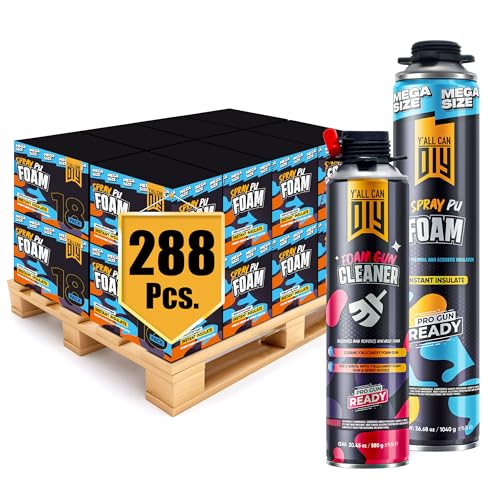
Comprehensive 16-Case Bundle – Y’allCanDIY Kit (Total 288 Cans) This bulk package includes 288 expanding PU foam cans (33.8 fl oz / 1000 ml each). The set also contains 16 PU foam guns, 16 PU foam gun cleaners, 96 pairs of nitrile gloves, 16 pairs of safety glasses, 16 respiratory masks, and 16 safety suit coveralls. It also includes 288 gun straws, 32 long straws, 32 nozzles, and 288 red spreaders (for use with foam guns), ensuring precise application and consistent results across all uses.

HIGH YIELD COVERAGE: Each can provides up to 21 board feet @ 1" depth for strong output and consistent coverage. Ideal for larger DIY insulation projects and professional applications.
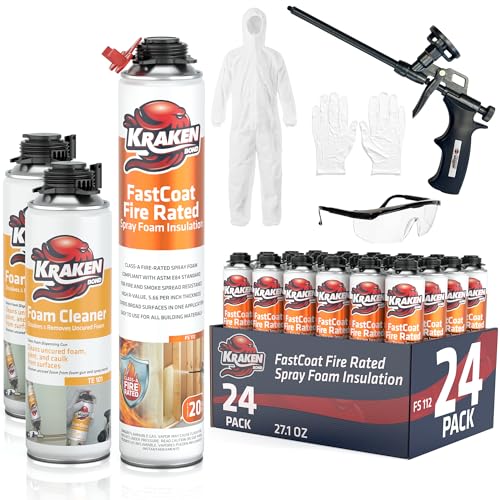
CLASS-A FIRE RATED & HIGH-EFFICIENCY INSULATION: Kraken Bond Spray Foam Insulation Kit is Class-A Fire Rated and meets fire safety standards, including ASTM E84, ensuring enhanced fire resistance for safer applications. It also delivers superior thermal performance (R-Value 5.66/inch) and acoustic insulation, making it ideal for attics, walls, and crawl spaces—perfect for both DIYers and professionals seeking reliable, safe results.
Cost-Effective Solutions for Noise Control
While we often think of soundproofing as a significant investment, numerous cost-effective solutions can help us achieve a quieter home environment.
Acoustic Caulking and Sealants
Applying acoustic caulking around window frames creates a basic barrier against noise and typically costs $15–$100. This DIY option effectively blocks minor leaks, enhancing our window noise resistance.
Noise-Reducing Curtains and Drapes
Noise-reducing curtains range from $20 to $400, with thicker fabrics like velvet improving sound absorption. Oversized curtains further minimize gaps.
Cellular and Layered Blinds
Honeycomb blinds can trap air, providing sound dampening. They often cost less than complete window replacements while delivering insulation benefits.
Aesthetic Considerations in Choosing Window Treatments
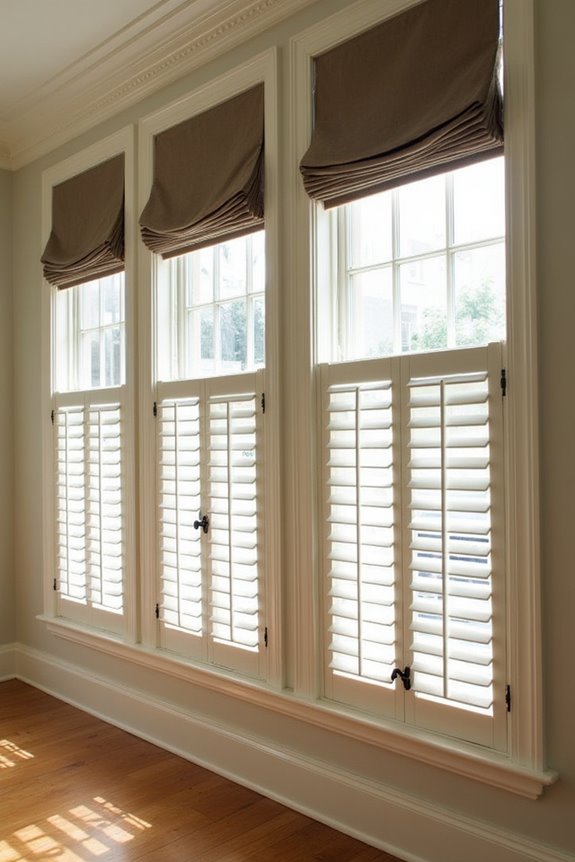
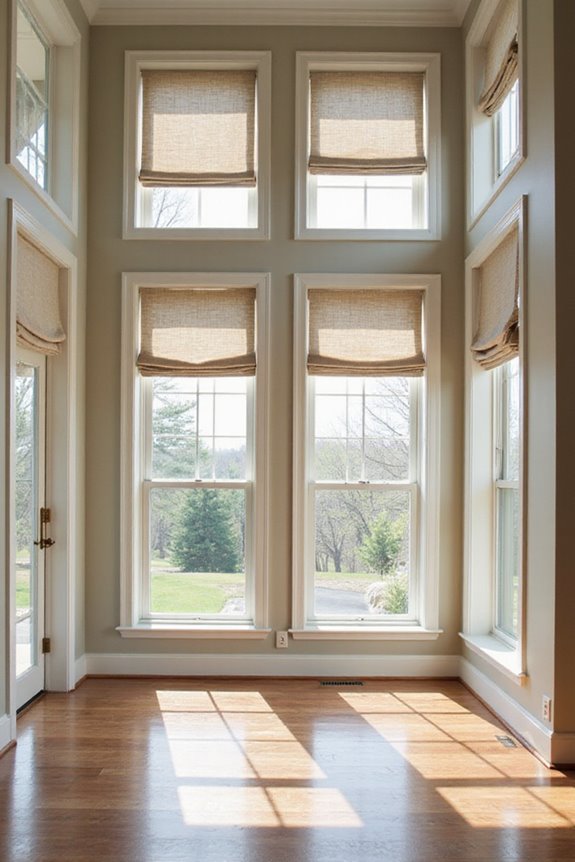
Choosing window treatments involves not only practicality but also an important aesthetic dimension. When selecting treatments, we should aim for aesthetic harmony with our existing interior design. For example, modern styles benefit from clean lines and neutral colors, while layered options like curtains over blinds offer depth and texture significance.
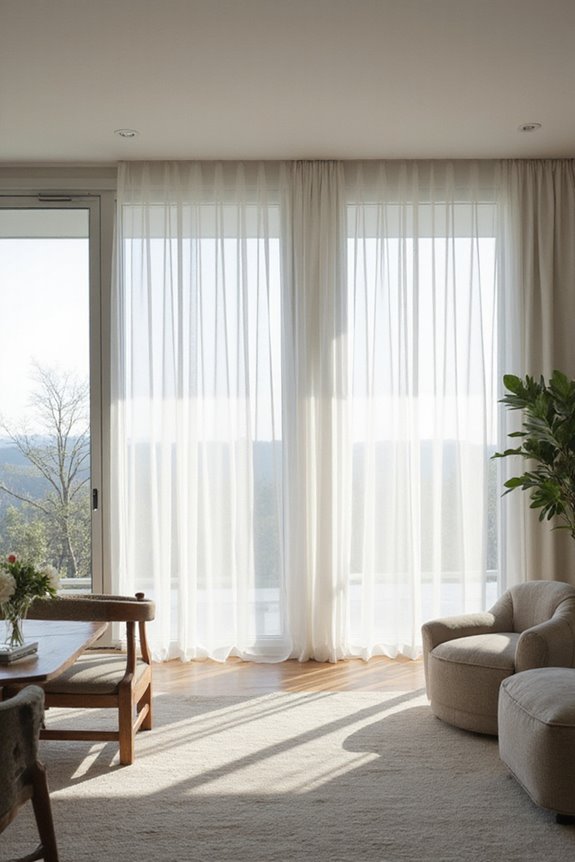
Natural materials, such as wood or bamboo, enhance warmth and fit various decor styles. Fabric choices can range from sheer linens for lightness to luxurious velvets. Color plays a vital role, as neutral shades create a calming atmosphere, whereas bold colors can energize a space. Ultimately, we want our window treatments to harmonize with furniture and walls, contributing to an inviting and cohesive environment while addressing noise reduction needs.
Frequently Asked Questions
How Do I Measure My Windows for Custom Treatments?
To measure our windows for custom treatments, we’ll use measurement tools like a steel tape measure. We should record the narrowest width and tallest height from multiple points for the best fit.
Can Window Treatments Block All Noises Completely?
No, window treatments can’t block all noises completely. While they provide some noise reduction as acoustic panels and noise barriers, we still need to contemplate additional measures for effective soundproofing within our spaces.
Are There Specific Colors That Enhance Noise Reduction?
No specific colors enhance noise reduction. Instead, we should focus on fabric selection and density. While color psychology may affect our mood, it doesn’t alter how well window treatments reduce sound.
How Often Should I Clean My Soundproof Curtains?
We should clean our soundproof curtains every 3 to 6 months for ideal maintenance, especially in high-use areas. Regular cleaning improves sound absorption and keeps them looking fresh while extending their lifespan.
Do Window Treatments Affect Natural Light?
Yes, window treatments definitely affect natural light. By using light filtering options, we can enhance light control while still managing our space’s ambiance. Striking the right balance guarantees both brightness and comfort in our homes.