As an Amazon Associate, we earn from qualifying purchases. Some links may be affiliate links at no extra cost to you. Although our opinions are based on curated research, we haven't used these products. Articles generated with AI.


What Are The Best DIY Window Treatment Ideas?

When we consider the best DIY window treatment ideas, there are several budget-friendly options to explore. First, we can create no-sew fabric curtains using lightweight materials, iron-on tape, and pre-sized items. Next, we might upcycle old materials, like denim curtains from jeans or transformed mini blinds into Roman shades. Additionally, painting techniques can enhance our curtains, while affordable blinds, such as drop cloth shades, provide rustic charm. If we keep going, we’ll discover even more innovative suggestions.
Key Takeaways
- Create no-sew fabric curtains using lightweight cotton or polyester blends with iron-on tape for easy installation and customization.
- Upcycle old materials like denim for durable curtains or transform mini blinds into stylish Roman shades for a practical approach.
- Experiment with creative painting techniques, such as dyeing or stenciling, to add unique designs to fabric and roller shades.
- Utilize affordable options like drop cloths, bamboo shades, or kraft paper to achieve budget-friendly window treatments with style.
- Incorporate plant-inspired designs and decorative films to enhance privacy while adding a modern, natural aesthetic to your windows.
No-Sew and Low-Cost Fabric Curtains

You may be interested
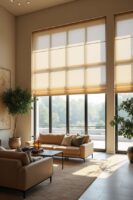


Creating beautiful fabric curtains doesn’t have to be an expensive or time-consuming project. By selecting lightweight cotton or polyester blends, we can easily create no-sew curtains that feature various fabric patterns. These materials allow for easy folding and bonding with iron-on tape. To guarantee a proper fit, we should measure the fabric to include extra curtain lengths for hems and rod pockets.
For those short on time, using pre-sized items, like tablecloths, can minimize preparation and cutting time. Once the fabric is ready, we can achieve a clean finish by folding edges over an inch and bonding them with fusible tape. This method is budget-friendly and enables many style updates without the need for sewing or expensive materials. Additionally, considering energy efficiency can enhance the overall functionality of your DIY window treatments.
Repurposed and Upcycled Materials

Repurposing and upcycling materials for window treatments offers an eco-friendly and cost-effective approach to home décor. For instance, we can create durable denim curtains using old jeans. By cutting the fabric into patches, applying starch for stiffness, and sewing the pieces together, we achieve a stylish and functional window covering.
Another innovative idea involves upcycled slide panels. We can use old photographic slides, connecting them with jump rings to form a unique panel that adds character to our spaces. Alternatively, we can craft window valances from fabric scraps or transform mini blinds into Roman shades, merging practicality with creativity. Each of these projects allows us to personalize our homes sustainably while reducing waste. Additionally, using Martha Stewart window treatments as inspiration can help elevate the overall aesthetic of your DIY projects.
Creative Painting Techniques

Dyeing and Painting Shades
We can dye various materials like fabric, roller, or cellular blinds. Using a mixture of dye powder and water enables us to customize colors. For a softer look, applying loose dye to wet fabric creates a beautiful watercolor effect. Swag window treatments can also benefit from these techniques, enhancing their aesthetic appeal while providing functional benefits.
Artistic Image Transfer
This method involves transferring images onto roller shades, giving our windows a unique artistic flair while serving functional purposes.
Stenciling Patterns
Utilizing stencils, we can create repetitive patterns with acrylic paint on plain shades. This technique transforms basic shades into striking visual elements, allowing us to explore various themes, from geometric shapes to floral designs.
Budget-Friendly Blinds and Shades

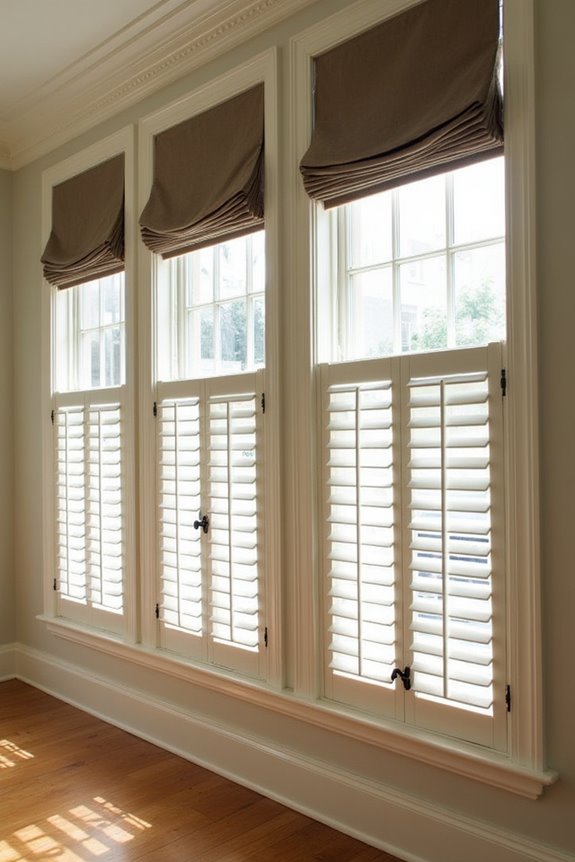
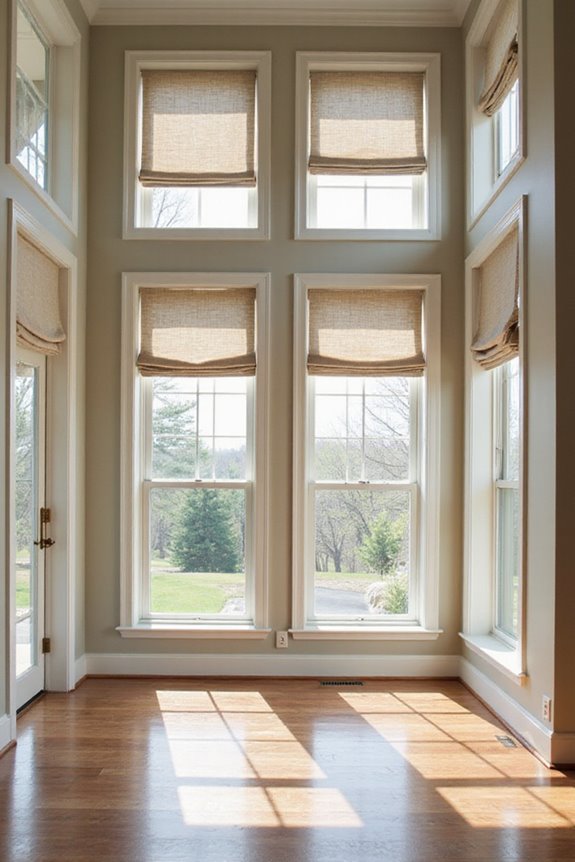
When it comes to window treatments, how can we achieve a stylish look without breaking the bank? One great option is to use affordable fabrics like drop cloths for rustic shades. We can also repurpose old mini blinds into fashionable Roman shades by attaching fabric, reducing waste. Bamboo or woven wood shades are available at low prices and can be customized for added flair. For a creative touch, kraft paper or patterned wallpaper offers excellent light filtration and style. Basic roller shades are cost-effective, too, and come in various colors. Additionally, incorporating energy efficiency benefits into your DIY window treatments can lead to improved indoor comfort while keeping budgets in check. With no-sew methods like hot glue or using tension rods, we simplify the installation process while adding personal touches to fit our décor, keeping budgets in check.
Innovative DIY Window Treatment Ideas

Innovative DIY window treatment ideas enable us to enhance our living spaces with creativity and style. By using plant-inspired treatments, we can incorporate greenery into our decor, enhancing both privacy and natural beauty. For instance, trailing plants like ivy can cascade over window edges, creating a soft, dynamic look.
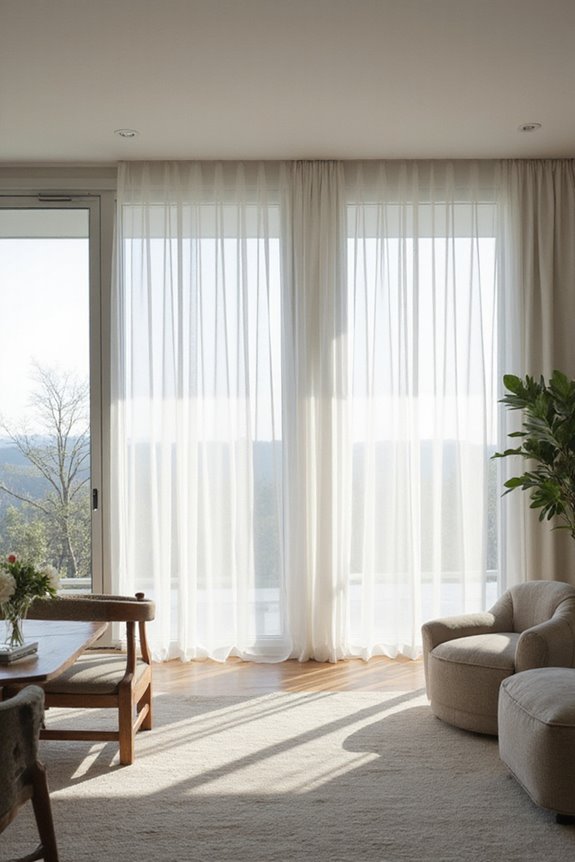
Additionally, decorative films offer a modern touch to our windows. Applying tinted glass film can increase privacy without blocking light, while frosted vinyl films add artistic flair. Sheer and light filtering options provide an excellent way to maintain brightness while ensuring seclusion.
Combining these elements—like using plant shelves alongside decorative films—can create layered, visually interesting window treatments. With just a bit of effort, we can transform our windows into functional art pieces that reflect our personal style and enhance our home environment.
Frequently Asked Questions
How Do I Choose the Right Fabric for My Window Treatments?
When choosing fabric for our window treatments, let’s consider types like polyester or silk, matching them with color schemes that complement our décor. Balancing durability, aesthetics, and maintenance can help us make the best choice.
What Tools Do I Need for DIY Window Treatment Projects?
For our DIY window treatment projects, we’ll need fabric scissors for precise cutting, a measuring tape for accurate dimensions, and tools like a drill, level, and stapler for installation and assembly. Let’s get started!
How Can I Measure My Windows Accurately for Treatments?
To measure our windows accurately for treatments, we should use a steel tape measure, mark points gently with a pencil, and record measurements promptly. Following these window measurement tips guarantees a perfect fit for our treatments.
Are There Any Safety Concerns With DIY Window Treatments for Children?
Did you know around 3,300 children under five get injured from window falls each year? For child safety, we should consider cord alternatives like cordless or motorized treatments, ensuring our DIY efforts prevent possible hazards.
How Can I Maintain and Clean My DIY Window Treatments?
To maintain and clean our DIY window treatments, we should use gentle cleaning techniques like dusting regularly and spot cleaning with mild solutions. These maintenance tips help preserve their appearance and longevity, keeping our space beautiful.