As an Amazon Associate, we earn from qualifying purchases. Some links may be affiliate links at no extra cost to you. Although our opinions are based on curated research, we haven't used these products. Articles generated with AI.

How To Measure For Window Blinds?

To measure for window blinds accurately, we’ll start with the mount type. For inside mounts, we need to measure the width at the top, middle, and bottom, using the smallest size. For outside mounts, we measure the entire width and add 3 to 6 inches on each side. Next, we’ll measure height from the top inside edge to the sill for inside mounts, and down from the headrail for outside mounts. We should also check the depth for a proper fit. Let’s explore each aspect further.
Key Takeaways
- Measure window width at the top, middle, and bottom for inside mounts; choose the smallest measurement and round down to the nearest 1/8 inch.
- For outside mounts, measure the entire width of the window including the frame, adding 3 to 6 inches on each side for coverage.
- Height for inside mounts should be measured from the top inside edge to the window sill; take multiple measurements and round up to the nearest 1/8 inch.
- When measuring for outside mounts, place the headrail 3 to 6 inches above the window and measure down to the desired length.
- Check the depth of the window frame to ensure it meets the minimum requirement of ¾ inch for inside mount blinds.
Understanding Mount Types

You may be interested



When choosing window blinds, understanding the different mounting options is vital for achieving the desired look and function. We typically consider two main types: inside mount and outside mount.
Inside Mount
- Blinds fit within the window frame.
- Offers a sleek appearance.
- Precise measurements are critical due to limited space.
Outside Mount
- Blinds are attached on the wall or molding, covering the window and surrounding trim.
- This option provides more flexibility in size.
- It’s advantageous when window frames are shallow.
For both mounts, keep important mounting considerations in mind. Confirm brackets are level during installation; this avoids misalignment and guarantees functional operation. Following specific installation tips from the manufacturer helps ensure that your blinds fit perfectly. Additionally, proper care and maintenance can extend the life of your window treatments, ensuring they remain functional and visually appealing.
Recommended Products

Cast the perfect mood. With durable, versatile, and stylish MOOD faux wood blinds. Available in an incredible range of sizes, large and small, at affordable prices. Venetian blinds filter the light beautifully to create the perfect mood you desire. Rotate the wand to adjust the light or privacy precisely.

Multi-purpose: Horizontal blinds for windows are very suitable to create a warm and comfortable space,open and chic,and block the sun with a complete style.It is very suitable for home,bedroom,living room,bathroom,kitchen,doors,windows and office etc

[Day-Night Cellular Shades ] :Day-Night motorized Shades offer exceptional versatility in light control. With their unique design, they consist of two layers of cellular fabric—one filter light and one blackout,and that can be independently adjusted. This allows you to achieve the perfect balance of natural light and privacy throughout the day and night.
Measuring Width

Measuring the width of your windows is an essential step in guaranteeing that your blinds will fit perfectly. To begin, we recommend using steel measuring tapes for enhanced width accuracy.
Inside-Mount Measurements:
- Measure at three points: top, middle, and bottom.
- Choose the smallest measurement to guarantee a snug fit within the frame, rounding down to the nearest 1/8 inch.
Outside-Mount Measurements:
- Measure the entire width of the window, including any frame.
- Add 3 to 6 inches on each side for better light blockage, guaranteeing the blinds cover trim elements. Additionally, ensure that you consider the mounting style as it affects final measurements and installation.
Recommended Products
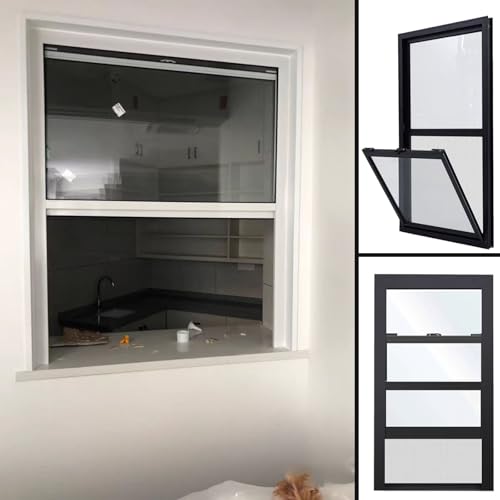
Durable Aluminum Sliding Windows Frame: Crafted from high-quality aluminum, our 2.3-inch (5.8cm) wide rust resistant windows frames are lightweight yet robust, ensuring long-lasting performance against harsh weather conditions. Perfect for various settings including sheds , chicken coops, basements, barns, households, stores, snack bars, playhouses, garages.

CAN REPLACE MECHANICAL FASTENERS - eliminate drilling, grinding, refinishing, screwing, spot welding and clean-up in many applications

Windows in Custom Sizes : Can't find the right fit? No problem! We offer customization services to tailor the window size to your specifications. Just provide us with the width and height of your window opening, and we'll take care of the rest
Measuring Height

Accurate height measurements are just as important as width measurements when selecting window blinds. For inside-mounted blinds, we’ll measure from the top inside edge of the window frame to the window sill. It’s crucial to take three measurements—left, middle, and right—using the largest for full coverage. We’ll round up to the nearest 1/8 inch to guarantee a good fit.
For outside-mounted blinds, we choose a headrail location 3 to 6 inches above the window frame. Again, we’ll measure from this point down. Make certain to add 3 to 6 inches for a valance if needed. Using proper measurement techniques, like a steel tape, helps make certain we don’t miss necessary height adjustments for a perfect fit. Additionally, accurate measurement is crucial for ensuring that your window treatments not only fit well but also enhance the overall aesthetics of your home.
Recommended Products

100% polyester, wall or ceiling mount with the same brackets. Mechanism and chain made of PVC in white, continuous chain mechanism with child lock

TRANSFORM YOUR SPACE - BlindsAvenue pleated shades for windows effortlessly revamp your home's look. Available for windows between 19" and 60" wide, and up to 64" tall, these shades for indoor windows offer style and practicality.
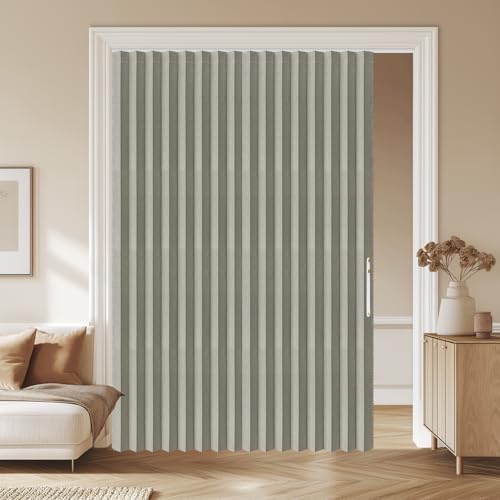
100% Blackout Fabric Curtains: Made from high-quality durable polyester combined with an ultra-soft triple-layer fabric, these blackout curtains ensure a tranquil environment conducive to work and relaxation.
Measuring Depth

To guarantee our window blinds fit perfectly, understanding how to measure depth is essential. Depth refers to the space from the front to the back inside our window frame. Accurate depth measurements confirm that our chosen blinds fit properly, avoiding issues like protrusion or interference with window components.
- Measuring Process: Use a steel tape measure for precision. Measure at the top of the window frame, extending back as far as we can. Check multiple points if there’s depth variation, and make sure to take into account any window cranks or handles that could obstruct installation.
- Minimum Requirements: Basic inside mount blinds need a depth of ¾ inch to 1¾ inches, while achieving a flush mount may require 3 inches or more. Always verify specific product depth requirements before ordering. Additionally, many window treatments feature hydrophobic properties that can enhance their performance and longevity.
Recommended Products
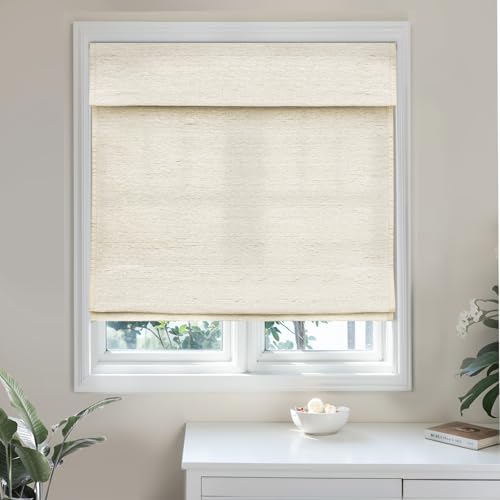
Natural Ramie Woven Blinds: Our cordless roman shades is made from natural fibers extracted from the ramie plant, carefully selected and processed with exquisite craftsmanship to ensure a soft and durable texture, bringing the natural charm into your home.

【Fabric Roman Shades Cordless】Fabric roman shades cordless paint our room with a touch of nature. The cordless design ensures safety and ease of use for children as well as pets, making these natural shades for windows the perfect combination of practicality and style. Certified as the best cordless control for children, the woven blinds cordless come with an attached handle pull that is easy to adjust and durable.

【Versatile Light Control】Motorized dual shades offer versatile light control options, combining blackout and light filtering capabilities in one solution.The dual layers allow you to adjust the amount of natural light entering your space, providing the flexibility to create different ambiance and levels of privacy throughout the day.
Tools for Accurate Measurements

When it comes to guaranteeing our window blinds fit correctly, having the right tools for measuring is essential. Accurate measurements start with reliable tools. Using a steel measuring tape is a traditional method, but we can also benefit from digital tools like laser measuring devices. These tools provide quick and precise readings, minimizing human error.
For challenging areas, adjustable diagonal extension tools can help reach hard spots. When measuring larger windows, step ladders guarantee our safety and accuracy. It’s also important to record measurements thoroughly using worksheets or notebooks for systematic documentation. Additionally, ensuring that measurements account for existing treatments such as window films can further enhance the accuracy of your blind installation. By incorporating these measurement techniques, we can confidently gather all necessary dimensions, paving the way for a perfect blind installation.
Recommended Products

PRODUCTIVE LASER - Brilliant color documents and fast print speed and standard two-sided printing. Durable and designed to increase your efficiency.

【RSO-73 Intelligent OTDR measurement】OTDR fiber optical tester provides wavelength of 1310/1550nm and dynamic range of 34/32dB,the max test distance 150km.For auto range mode:can one click start test,only select the wavelength and test time,quickly perform the test.For parameters setting mode:Testing after setting parameters distance scope,pulse width,duration of measurement etc.Curvest/ map are displayed simultaneously.Pls note:This mode only can detect optical signal,doesn't support live test.

Productive Laser - Brilliant color documents and fast print speed up to 26ppm & standard two sided printing. Designed to increase your efficiency. Tray capacity up to 250 pages, plus single-sheet feeder. 1-GHz dual-core processor & 512 MB of memory.
Additional Considerations
While measuring for window blinds, several important factors can affect the final outcome, so it’s essential to take them into account.
Cord Safety Considerations
We need to prioritize cord safety, especially in homes with children or pets. Selecting blinds with breakaway or cordless mechanisms can minimize hazards associated with dangling cords. Additionally, opting for cordless window coverings can significantly reduce the risk of accidents related to window treatments.
Material Impact
The choice of material can impact our measurements. For instance, heavier materials like wood or aluminum may require different mounting supports. We should also consider how these materials affect light filtration and insulation.
Common Mistakes to Avoid
Measuring for window blinds is a precise task, and mistakes can lead to poor fitting and functionality. To avoid common measurement errors, we should remember a few key points:
Measure Multiple Times
Let’s not measure width or height just once. We should take measurements at the top, middle, and bottom for width; for height, measure the left, middle, and right.
Avoid Using Old Measurements
Instead of relying on previous blinds or bracket sizes, we must directly measure the window frame edges.
Use a Level
Using a level tool is essential. It helps identify any unevenness in the window frames.
Double-Check Everything
Finally, let’s recheck our measurements multiple times. This can prevent costly mistakes when ordering blinds. Simple precision techniques can make all the difference.
Frequently Asked Questions
How Do I Measure for Specialty Window Shapes?
To measure for specialty shapes, we need to clearly identify the window type and use precise measuring techniques. Let’s guarantee we capture accurate dimensions to fit blinds perfectly, accounting for the unique angles and curves.
Can I Install Blinds on Non-Standard Window Sizes?
Yes, we can install blinds on non-standard window sizes by opting for custom sizing. Custom window treatments offer tailored solutions, ensuring our unique windows are beautifully covered and functionally treated to enhance our space.
What if My Window Frame Has Obstructions?
When life presents obstacles, we must adapt. For window frame obstructions, we’ll measure width and height carefully, avoiding those pesky protruding handles. Paying attention to obstruction types and using smart measuring tips guarantees a seamless fit.
Do I Need to Measure for Installation Brackets?
Yes, we need to measure for installation brackets. Considering bracket types and placement is essential for proper fit and function, ensuring our blinds operate smoothly while enhancing the overall aesthetics of our windows.
How Do I Choose the Right Blind Style for My Decor?
Choosing the right blind style for our decor is like finding the perfect outfit. We should consider fabric types and blind color that complement our room’s vibe, ensuring both aesthetics and functionality unite harmoniously in our space.