As an Amazon Associate, we earn from qualifying purchases. Some links may be affiliate links at no extra cost to you. Although our opinions are based on curated research, we haven't used these products. Articles generated with AI.


How To Choose Window Treatments For Rooms With Wooden Floors?

When choosing window treatments for rooms with wooden floors, we should consider color coordination, style, and function. Warm wood floors pair well with earthy colors like beige, while cool wood floors suit shades like slate gray. For functionality, think about room requirements; bedrooms need blackout shades, while kitchens require moisture-resistant options. We must also select treatments based on window size—floor-length for large windows and blinds for smaller ones. Let’s explore how layering and maintenance can enhance our choices.
Key Takeaways
- Match warm wood floors with earthy colors like beige; cool wood floors pair well with slate gray and pastel shades for harmony.
- Select moisture-resistant window treatments like faux wood blinds for humid spaces and layered options for enhanced light control and aesthetics.
- Use light control techniques, such as sheer curtains combined with blackout shades, to manage natural light without overpowering wooden flooring.
- Consider window size: opt for floor-length drapes for large windows, blinds for small windows, and layered treatments for medium windows.
- Regularly maintain treatments by dusting and using appropriate cleaning methods, ensuring they complement and preserve the beauty of your wooden flooring.
Understanding Color Coordination With Wooden Floors

You may be interested
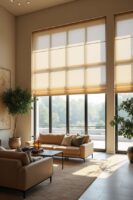
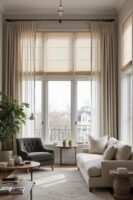
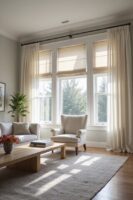
When choosing window treatments for rooms with wooden floors, it’s essential to understand how colors and undertones interact. The undertones in our wooden floors—warm or cool—affect our color options considerably.
Matching Undertones
- Warm wood floors pair best with earthy, warm colors like beige and taupe.
- Cool wood floors, such as gray ash, suit cool shades like slate gray and pastel blues.
Using Color Psychology****
These color choices influence room moods; warm tones create coziness, while cool tones promote calmness.
Seasonal Palettes
It’s also important to think about seasonal palettes. Warm hues can enhance the autumn vibe, whereas cool colors bring freshness to our spaces. Additionally, choosing window treatments that complement the color of your floors can significantly enhance the overall aesthetic of the room.
Understanding these elements allows us to unify our window treatments with our wooden floors effectively.
Choosing the Right Color Scheme for Window Treatments

Choosing the right color scheme for window treatments can markedly enhance the overall aesthetic of a room with wooden floors.
Color Psychology and Wood Floors
When we think about colors, their emotional impact, or color psychology, plays a significant role. For warm wood undertones, cool-colored curtains, like blues or greens, provide a striking contrast. Conversely, cool wood undertones work well with warm shades such as blush or dusty rose. Incorporating sheer fabrics can also help to filter light while maintaining a cohesive look.
Incorporating Patterns
We can also explore pattern combinations. Neutral window treatments harmonize with wooden floors while adding subtle visual interest. Earth tones, like muted greens or browns, can create cohesion and emphasize the natural aesthetic.
Final Thoughts
Let’s remember to reflect on each room’s function when choosing colors to create the desired atmosphere, whether it’s calming or energizing.
Types of Window Treatments Compatible With Wooden Floors

There are various window treatment options that not only complement wooden floors but also enhance the overall look and functionality of any room.
Shutter Styles
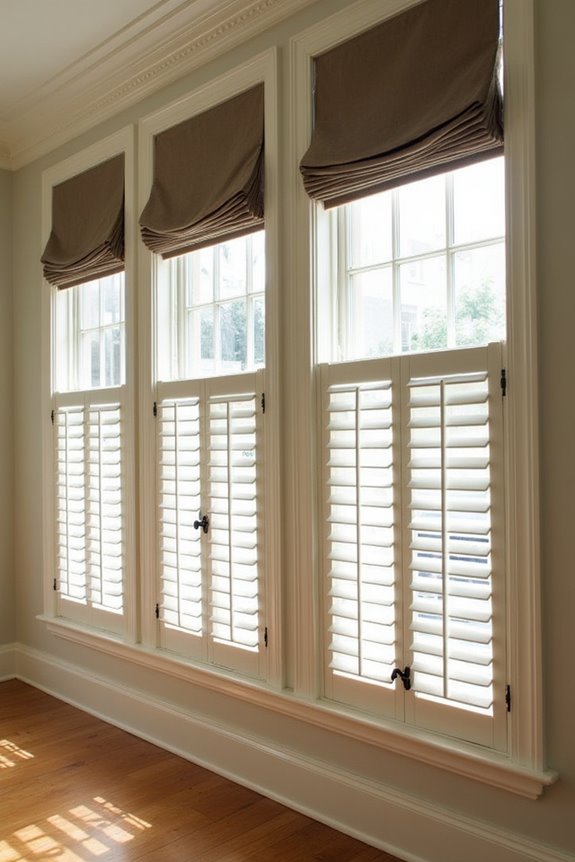
Plantation shutters offer durability and a classic look, available in various colors to match or contrast with floor tones. They’re excellent for living rooms, kitchens, or home offices. Additionally, their energy efficiency features make them a smart choice for maintaining comfortable room temperatures.
Blind Options
Wood blinds deliver an authentic look but work best in low-humidity spaces. For humid areas, faux wood blinds are a practical choice. Metal blinds provide a modern edge and work well in high-traffic zones.
Fabric Treatments
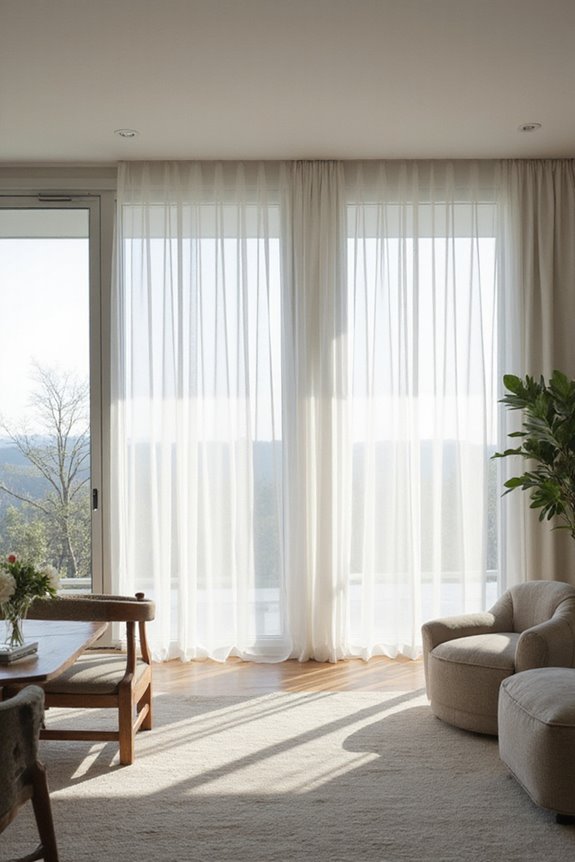
Soft sheer shadings and customizable roller shades can also suit hardwood environments, allowing light control while protecting floors from UV damage. These options create a balanced feel against the hardness of wood.
Aligning Window Treatments With Home Style

Aligning window treatments with our home’s style is essential for creating a unified look throughout our space. The right window styles complement our architecture, whether it’s modern, traditional, or rustic.
- Contemporary homes benefit from sleek treatments like roller shades or panel tracks, enhancing those clean lines.
- Traditional interiors often pair well with layered treatments, such as drapes over Roman shades, providing elegance.
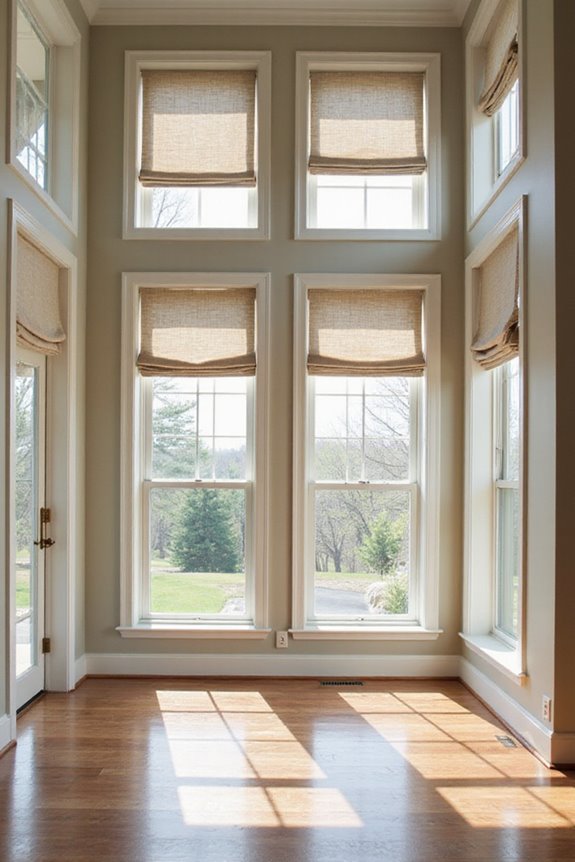
Incorporating natural materials, like bamboo or woven wood, can echo organic elements, blending beautifully with wooden floors. Additionally, custom designs allow us to align treatments with unique architectural details, preserving our home’s style integrity. By considering current treatment trends, we can also use patterns and colors that either contrast or harmonize with our room’s overall palette, promoting a well-balanced aesthetic. Furthermore, selecting options that provide energy efficiency can enhance comfort while contributing to a sustainable home environment.
Functionality Considerations for Different Rooms

When considering window treatments for different rooms in our home, functionality plays an important role in enhancing our living experience.
Bedroom
In the bedroom, we should prioritize privacy and light control. Options like blackout shades and layered treatments improve restfulness and comfort.
Living Room
For the living room, selecting window treatment styles that frame our windows elegantly, such as drapery or blinds, can enhance the overall décor while managing light.
Kitchen
In the kitchen, we need durable, moisture-resistant options like faux wood blinds that are easy to clean and withstand humidity.
Bathroom
For bathrooms, moisture-resistant shades are vital to prevent mold. Simple designs that secure privacy without blocking natural light are critical.
Home Office
In the home office, solar shades can help manage glare while maintaining natural light, boosting productivity. Additionally, considering semi-sheer fabrics can provide a balance between light control and privacy.
Balancing Light and Dark Tones
Balancing light and dark tones in our homes requires careful consideration, especially when coordinating window treatments with wooden floors. For light hardwood floors, choosing bold or dark-colored window treatments, like rich blackout drapes, can prevent a washed-out appearance. Conversely, dark wood floors may benefit from lighter treatments, such as soft whites or creams, which can brighten the space.
We can also enhance our designs by layering textures and incorporating contrasting patterns. Textured or patterned window treatments add depth and interest, which complements the varying wood grain. By selecting window treatments that harmonize without perfectly matching the flooring, we encourage a sophisticated contrast, enhancing the overall aesthetic of our rooms. Additionally, considering energy efficiency benefits can further improve the comfort and functionality of our spaces.
Effects of Material and Durability on Window Treatments
Selecting the right material for our window treatments greatly influences both their durability and aesthetic appeal. Different materials offer various benefits, guaranteeing we maintain a perfect balance between style and function.
- Aluminum is strong and corrosion-resistant, enhancing longevity.
- Faux wood mimics natural wood, providing moisture resistance without warping or fading.
- Vinyl and fiberglass are excellent for high-humidity areas, maintaining color and structure.
- Polyester fabrics, while stylish, attract dust and require more upkeep.
When choosing, we must consider room conditions and material durability. For instance, opting for faux wood in a damp area guarantees aesthetic balance while enhancing durability. By understanding material properties, we can make informed choices for lasting window treatments that complement our wooden floors.
Adjusting for Light Control and Privacy Needs
Adjusting light control and privacy needs in our homes is essential to maintaining comfort and protecting wooden floors. We can utilize light diffusion techniques like semi-transparent sheers or cellular honeycomb shades, which reduce glare while keeping rooms bright. Solar shades are effective for daytime use, filtering UV rays and minimizing damage to our floors.
For more precise control, horizontal slats or vertical blinds help direct natural light effectively. Blackout roller shades are perfect for bedrooms, providing complete darkness and privacy. Layering treatments, such as combining sheer curtains with blackout drapes, offers flexibility regarding light and privacy. By selecting the right window treatments, we enhance both comfort and the longevity of our wooden floors.
Adapting Window Treatments to Room Moisture Levels
When it comes to choosing window treatments for spaces with varying moisture levels, we need to take into account how different materials and designs can influence both our wooden floors and overall comfort. Proper treatment placement is essential for effective moisture regulation. For humid areas, we should use moisture-resistant materials, like PVC or vinyl, that won’t warp or grow mold.
Positioning air supply vents near windows allows warm air to flow over glass surfaces, reducing condensation. Additionally, layered treatments, such as blinds combined with curtains, can help insulate and regulate temperature. By choosing treatments that don’t block airflow and are easy to maintain, we can safeguard both our wooden floors and the windows from potential moisture damage.
Selecting Treatments Based on Window Size and Proportions
How do we choose the right window treatments based on the size and proportions of our windows? Understanding window treatment styles is essential for achieving a balanced look.
Large Windows
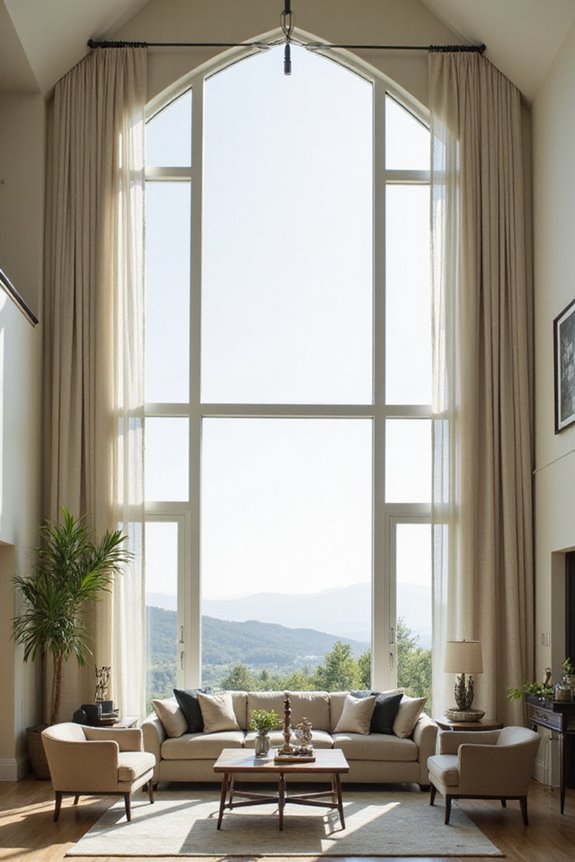
For large windows, floor-length curtains create visual height and drama. Consider multiple panels for wider windows to draw open symmetrically.
Small Windows
Small windows benefit from blinds or shades to avoid overwhelming the space. Lighter materials maintain openness while offering privacy.
Medium Windows
Medium windows can be dressed with drapes or layered treatments for added balance.
Height Considerations
Hanging treatments several inches above the frame enhances perceived height, especially for tall windows.
The Benefits of Layering Treatments for Style and Function
Layering window treatments offers a distinctive way to enhance both the style and functionality of our living spaces. By combining different materials and styles, we can enjoy improved light control, privacy, and aesthetic depth. Layering textures, like sheer curtains under heavier drapes, allows us to soften harsh sunlight while maintaining our desired privacy levels throughout the day.
This combination not only enhances ambiance but also provides flexibility for various activities, such as reading or watching television. Additionally, layered treatments can improve energy efficiency, helping to insulate our windows against temperature fluctuations. Overall, this approach enriches our interiors while adapting to our needs, making it a practical choice for enhancing both style and function in rooms with wooden floors.
Maintenance and Cleaning Considerations for Window Treatments
Proper maintenance and cleaning of window treatments are essential for preserving their appearance and function over time. To keep treatments like honeycomb shades dust-free, we can use a hair dryer on a cool setting or compressed air for hard-to-reach areas. For aluminum and vinyl blinds, anti-static dryer sheets work well to reduce dust accumulation. When caring for alternative wood blinds and shutters, a soft, damp cloth is best—avoid water and harsh care products that can cause damage.
Routine dusting and cleaning help prevent buildup. It’s also important to regularly sweep and vacuum our floors to minimize dust transfer to window treatments. By using appropriate cleaning tools and techniques, we can maintain the beauty and longevity of both our window treatments and wood floors.
Final Tips for Coordinating Window Treatments With Wooden Floors
When coordinating window treatments with wooden floors, it’s important to take into account both color and style to create a cohesive look in our living spaces.
Color Choices
For dark wooden floors, we should choose lighter or neutral window treatments, while light wood floors benefit from bold or darker options. This helps us apply contrast techniques that enhance visual harmony.
Style Alignment
Let’s align our treatments with our home’s style. Wooden blinds or shutters offer a natural texture that complements hardwood.
Material and Texture
Mixing textures, like soft fabric drapes with smooth wooden floors, adds depth.
Practical Functionality
Lastly, consider light control needs; sheer fabrics provide gentle privacy and light, maintaining the room’s balance and functionality.
Frequently Asked Questions
What Styles of Window Treatments Are Trending Right Now?
Right now, we’re seeing a blend of bohemian chic and minimalistic design in window treatments. Layered textures and earthy tones offer warmth, while clean lines maintain simplicity, creating the perfect balance for today’s interiors.
Can I Mix Different Materials for Window Treatments?
Absolutely, we can mix different materials for window treatments! By carefully choosing material combinations, we create design harmony that enhances both function and aesthetic, making our spaces unique and visually interesting while ensuring practicality.
How Do I Measure Windows for Custom Treatments?
Like sculptors chiseling their masterpiece, we start by measuring each window carefully, noting dimensions for custom treatments. We measure width at three points, height at multiple spots, and always verify to guarantee perfection in fit.
Are There Eco-Friendly Options for Window Treatments?
Absolutely, there’re eco-friendly options for window treatments! We can choose sustainable fabrics and natural materials like bamboo, cotton, and recycled polyester, enhancing both our home’s style and its environmental impact while promoting healthier indoor spaces.
What Are the Best Budget-Friendly Window Treatment Options?
We’ve found that budget blinds and curtain alternatives like faux wood shades and inexpensive roller blinds offer great style and functionality. They’re perfect for any room, enhancing aesthetics without straining our budget!