As an Amazon Associate, we earn from qualifying purchases. Some links may be affiliate links at no extra cost to you. Although our opinions are based on curated research, we haven't used these products. Articles generated with AI.

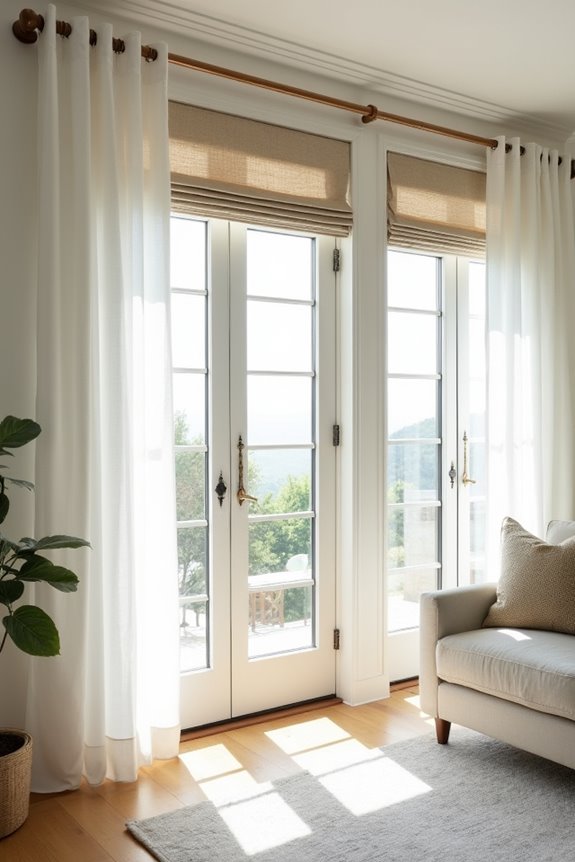
What Are DIY Window Treatment Options?

DIY window treatment options provide us with creative ways to enhance our spaces. We can choose from various materials like cotton, linen, or even upcycled items, such as shower curtains and tablecloths. Popular styles include roller blinds, Roman shades, and curtain layering for added depth. To personalize these treatments, we can use stencils or vintage hardware. Finally, proper maintenance guarantees longevity. Let’s explore more about specific materials and designs to create the ideal window treatments for our homes.
Key Takeaways
- Popular material options include natural fabrics like cotton and linen, as well as unconventional items like shower curtains and tablecloths.
- Common DIY window covering types include roller blinds, Roman shades, Venetian blinds, and vertical blinds, each with unique styles and functionalities.
- Creative repurposing ideas involve transforming old curtains into area rugs, napkins, bulletin boards, and throw pillows to add personal flair.
- Hardware options include wooden dowel rods, magnetic rods, and curtain rings with clips, enabling varied and easy installation methods without drilling.
- Maintain DIY window treatments through regular dusting, spot cleaning, and annual inspections for cords and hardware to ensure longevity and functionality.
Popular DIY Window Treatment Materials
You may be interested

When it comes to creating our own window treatments, the variety of materials we can choose from plays an essential role in both appearance and functionality. We have access to several natural fabric options and unconventional materials that allow for creative expression.
Natural Fabric Options
- Cotton: Durable and versatile, perfect for a range of styles.
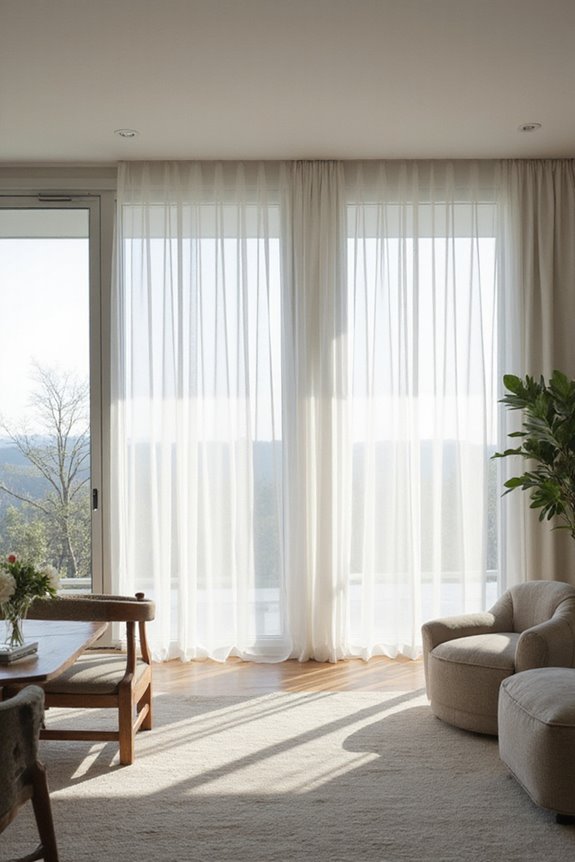
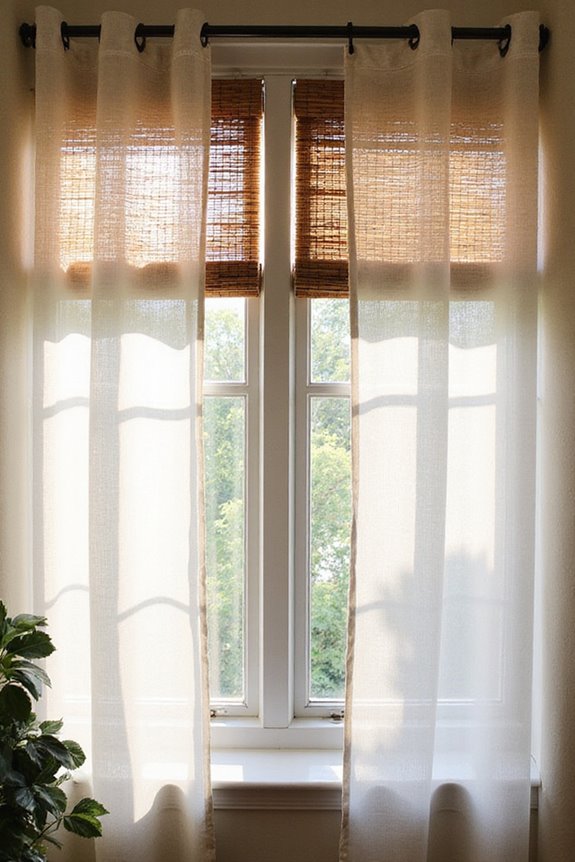
- Linen: Lightweight and breathable, offering a soft filter of light.
- Burlap: Budget-friendly and rustic with charming texture.
Unconventional Materials
- Shower Curtains: Waterproof and colorful, ideal for unique panels.
- Tablecloths: Upcycled to create budget-friendly curtains.
- Old Mini Blinds: Perfect for DIY Roman shades.
Additionally, incorporating materials like reflective films can enhance privacy while still allowing natural light to filter in. Each of these materials opens new possibilities for designing our space effectively and stylishly.
Common DIY Window Covering Types
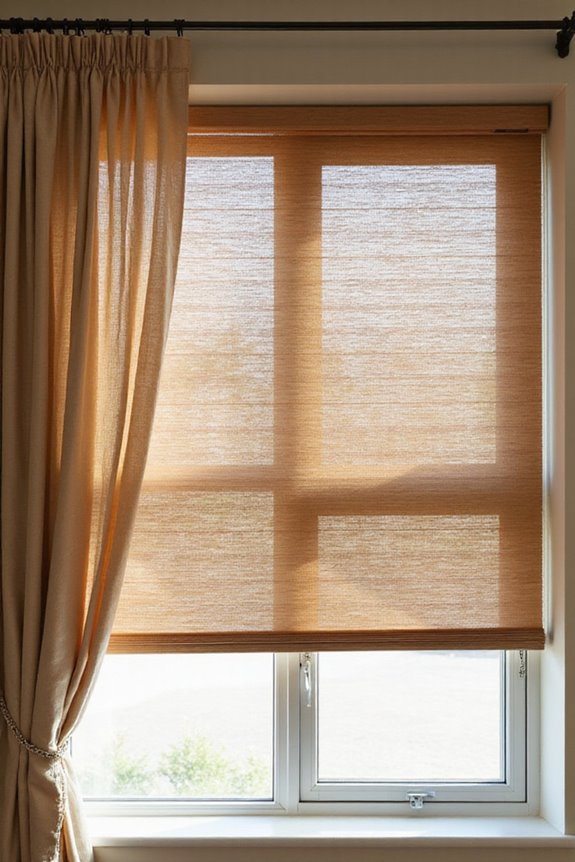
There are several effective and stylish options for DIY window coverings that can enhance any space while providing functionality.
Roller Blinds offer benefits such as clean designs and easy installation, available in light filtering and blackout fabric choices.
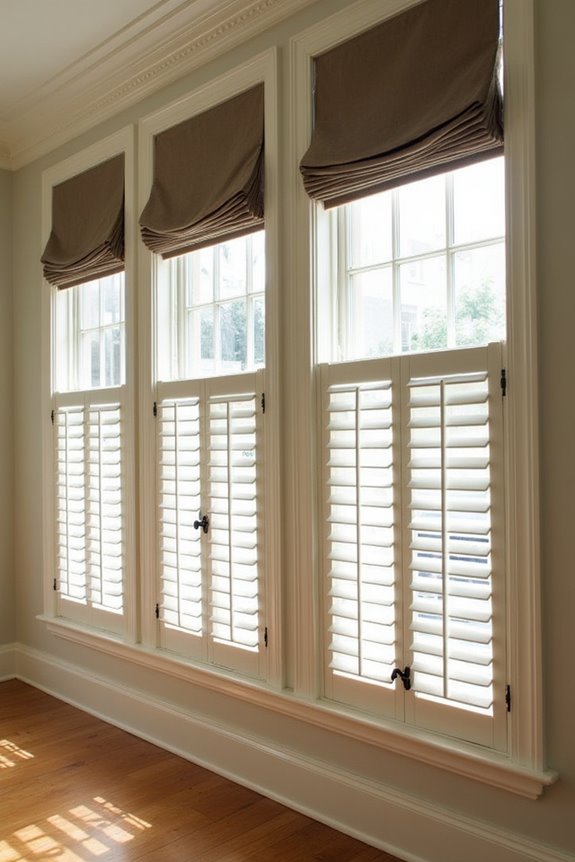
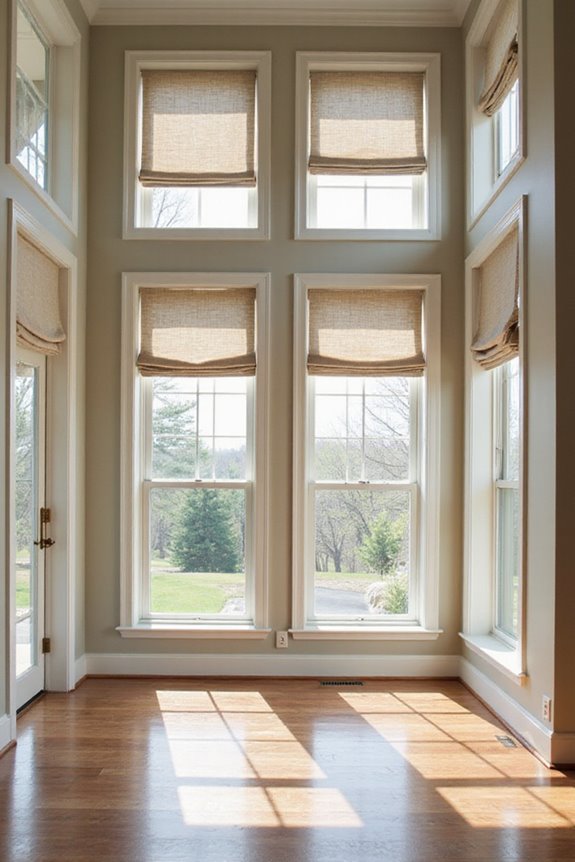
Roman Shades come in various styles, adding softness to any room, with options for blackout fabrics.
When considering Venetian Blinds, remember they require regular maintenance but allow for precise light control.
Vertical Blinds are perfect for large windows and can be adjusted easily for light filtering.
We can also explore Curtain Layering Techniques, where curtains are combined with other treatments for improved insulation. Cafe Curtain Designs provide a unique look while ensuring privacy in lower sections of windows. Additionally, incorporating light-filtering treatments can enhance coziness while maintaining natural light in your space.

Excellent Blackout Effect: Our motorized blinds achieve full blackout with 4-layer fabric that blocks light, noise, provides privacy control, insulation and UV protection; Motorized roller shades perfect for bedrooms, living rooms, offices, and more

【Extremely Aesthetic Light Filtering Roller Shades】 The intricate textures of light filtering motorized roller shades enhance aesthetics and moderately obscure light, reducing glare and maintaining a comfortable environment with ample natural light, making them perfect for areas requiring balanced light control. Ideal for living rooms and dining areas, they provide privacy while casting soft natural light. We have 4 options for light-blocking levels: 50%, 60%, 70% and 75% blackout.

Perfect & Precise Light Control: Kincmo motorized zebra blinds combine fabric slats and sheer stripes for dual privacy and light control; Zebra shades can be fully closed to block UV rays, noise and heat, or opened up to 50% for softer lighting
DIY Window Treatment Repurposing Ideas
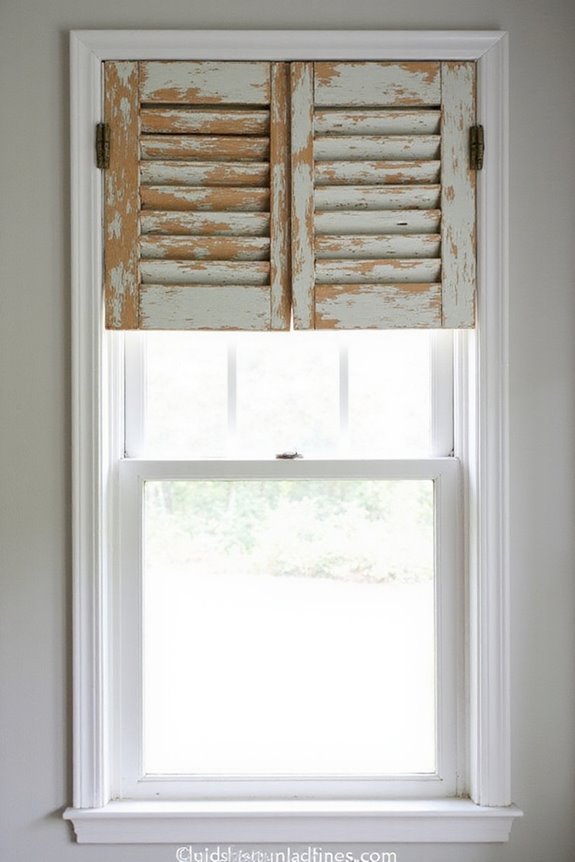
Repurposing existing window treatments is a smart and creative way to refresh your home decor while minimizing waste. Here are some effective ideas we can explore together.
1. Area Rugs: Old curtains can be cut and hemmed to transform them into unique area rugs, adding character to our spaces.
2. Washable Napkins: Durable fabric from curtains can be turned into practical, washable napkins by cutting and hemming evenly-sized squares.
3. Bulletin Boards: Wrapping unframed cork boards with curtain fabric creates custom bulletin boards, perfect for notes and pictures.
4. Throw Pillows: By sewing two pieces of repurposed curtains together, we can create stylish throw pillows, enhancing our seating areas.
Additionally, incorporating decorative films can further enhance the aesthetic appeal of your home while providing functional benefits. Utilizing vintage hardware can complete these projects, making them not only functional but also aesthetically pleasing.
DIY Window Treatment Hardware Options

【No Drilling No Tools No Brackets Installation】No need to worry about damage to the wall caused by drilling holes, this no drill cordless top down bottom up cellular shades doesn't need any tools, brackets or screws. Quickly install in 1 minutes and keep the no drill blinds for windows stable and secure.
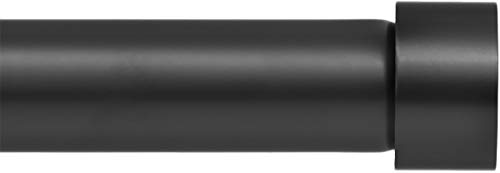
Complete Modern Treatment Decorative Window Hardware Curtain Rod.
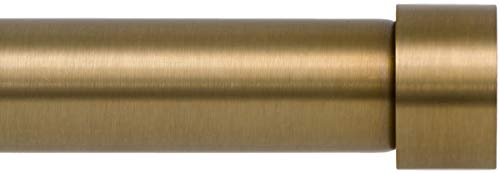
Complete treatment telescoping side window curtain rod with hardware and modern design.
DIY Window Treatment Hardware Options
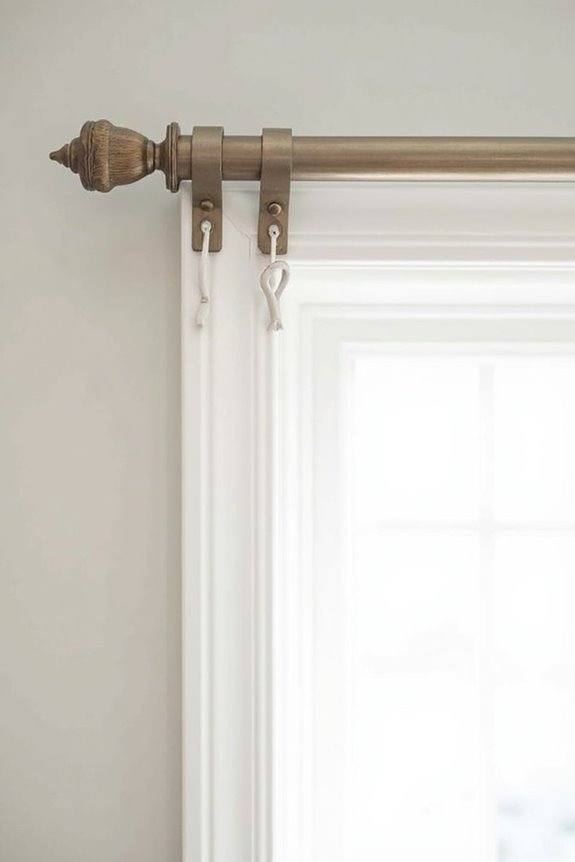
DIY window treatment hardware options provide both functionality and style, allowing us to customize our spaces without excessive costs or installation hassles.
Creative Rod Solutions
For those looking for unique designs, we can use wooden dowel rods or leather straps for decorative holders. This personal touch adds character to our window treatments.
Efficient Hanging Methods
No-drill options enhance ease of use. Magnetic rods and adhesive hooks allow for quick installation and repositioning, making them perfect for renters. Curtain rings with clips let us hang lightweight curtains effortlessly.
Drapery Track Systems
For a sleek look, we can consider track systems that glide smoothly, accommodating various pleat styles. These durable options offer both visual appeal and functional ease, making them suitable for large windows or frequently used doors. Additionally, proper installation is crucial to ensure that the panels are evenly hung for a visually appealing result.
Types of Blinds Suitable for DIY Installation
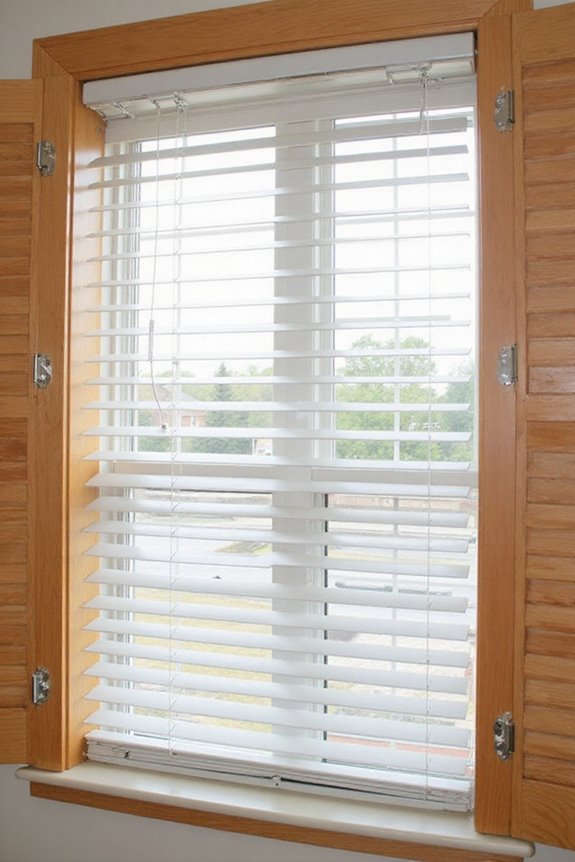
When considering window treatments, options for blinds often come to mind as stylish and functional solutions. There are several types we can explore for DIY installation.
Horizontal Blinds
These are versatile with tilted slats that control sunlight efficiently.
Vertical Blinds
Ideal for large windows and sliding doors, offering easy light adjustment.
Cellular Shades
These shades provide energy efficiency through heat retention and cooling benefits.
Faux Wood Blinds
Perfect for humid areas like kitchens, they’re easy to maintain.
Blackout Shades
Designed to block nearly all sunlight, they’re great for bedrooms, especially options like 100% blackout roller shades which provide complete darkness for optimal sleep.
We can utilize various blinds installation techniques, ensuring we choose appropriate hardware for successful mounting and a tidy finish. Whether we prefer inside or outside mounts, options exist to suit our specific needs.

How to Choose Your Size: Just measure your window’s width and round DOWN to the nearest 1/2" size. Pick a width slightly smaller than your window’s exact measurement: If your window is 30 7/8" wide → choose 30 1/2". If your window is 30 1/8" wide → choose 30".

Material – 80% blackout dual-layer zebra fabric combines light-filtering sheers with banded polyester for privacy and UV protection. Adjust fabric positions to control brightness. For perfect band alignment, place one single order for multiple zebra blinds (produced in the same batch). Cordless design ensures child and pet safety. Motorized zebra shades are perfect for living room, patio sliding door, office, etc. Indoor use only.

【Smart Motors Optional】SW101 STANDARD MOTOR need smart hub to connect to All versions Alexa and Google Assistant. SW201 SMART MOTOR (Zigbee Motor) can connect 5 Versions' Alexa directly (Echo Plus 2nd Gen, Echo Show 2nd Gen, Echo Studio, Echo Show 10, Echo 4th Gen). Other version of devices and Google still need a smart HUB. SW401 Z-Wave Motor work with smart hub at home. SW501 THREAD MOTOR work with HomeKit via Thread networking technology.
Considerations for Selecting DIY Window Treatment Fabrics
Selecting the right fabric for window treatments is essential, as it can greatly impact both the functionality and aesthetic of our space. Here are some considerations when choosing fabrics:
Fabric Breathability: Opt for breathable materials like cotton if ventilation is important in our rooms, particularly in warmer climates.
Fabric Durability: For areas with children or pets, we should choose durable options like polyester or canvas, which withstand daily use.
Aesthetic Patterns: Consider fabrics with patterns, such as damask or florals, to enhance the room’s décor.
Thermal Insulation: Heavyweight fabrics like velvet offer thermal insulation, ideal for bedrooms, while sheer fabrics provide light filtration but less privacy. Additionally, selecting materials with energy efficiency features can help maintain room temperature and reduce energy costs.
Balancing these factors guarantees our window treatments are both beautiful and functional.
How to Measure Windows for Treatments
Measuring windows accurately for treatments is a essential first step in ensuring a successful installation. We’ll need some important tools: a steel measuring tape, a pencil, and paper to record our measurements. For both inside and outside mounts, measuring tips suggest we take measurements at multiple points—width at the top, middle, and bottom, and height on the left, center, and right.
When measuring window width, the narrowest width should be recorded for inside mounts, while outside mounts require adding extra width for overlap. Height measurements should accommodate our desired treatment length. It’s important to check window squareness by measuring diagonals and depth for compatibility. Finally, let’s organize our measurements clearly, writing each as width x height for accuracy.
Budget-Friendly DIY Window Treatment Tips
Enhancing our windows with stylish treatments doesn’t have to drain our wallets. Here are some budget-friendly DIY window treatment tips that offer cost-effective solutions.
Ready-Made Options
We can save by opting for ready-made curtains and blinds from home improvement stores or online. These standard sizes are affordable and easy to replace.
No-Sew Techniques
Using materials from craft stores, we can create window valances without sewing. Tutorials make these projects quick and simple, perfect for those seeking fabric alternatives.
Layering Treatments
Layering inexpensive shades with curtains adds sophistication at lower costs. This approach allows us to customize light control while maximizing style.
Affordable Hardware
Buying budget-friendly hardware, like curtain rods, can refresh our window’s look without complete replacements. Simple installation makes it accessible for everyone.
Decorative Tiebacks and Accessories
Creating a cohesive window treatment design involves not just the curtains themselves but also the accessories that complement them, such as decorative tiebacks. These tiebacks serve both functional and aesthetic purposes, enhancing overall decor.
Types of Decorative Tiebacks:
- Cord Tiebacks: Made from ropes or braided cords, available in various textures.
- Fabric Tiebacks: Simple strips of fabric that create a seamless look.
- Floral Tiebacks: Incorporate real or artificial flowers for a seasonal touch.
- Ribbon Tiebacks: Use versatile ribbons for playful knots or bows.
- Crystal or Metal Tiebacks: Offer an elegant, modern design.
With creative tieback ideas and seasonal tieback alterations, we can easily customize our window treatments, reflecting our personal style and the changing seasons.
How to Hang DIY Window Treatments
Hanging DIY window treatments can transform a room, adding style and functionality to our space. To start, we should measure our window width and desired curtain length carefully. Next, we can decide the ideal hanging height based on the window frame.
Using brackets or hooks, we should mark positions on the wall to avoid any hanging challenges. Securely drill brackets into the wall, ensuring they’re level and well-fastened. For a no-drill option, adhesive hooks can work, but we need to select ones rated for our curtain weight.
Tension rods and wire cables also provide creative solutions. Using various rod attachment types will enhance our crafting techniques, ensuring our installations look neat and polished throughout our home.
Customizing Patterns With Stencils
When considering ways to customize our window treatments, utilizing stencils can offer a simple yet effective approach. Stencil designs can transform plain fabric into beautiful works of art, allowing us to express our style.
To create consistent pattern repetition, we should choose stencils with registration marks for easy alignment. Applying designs as allover patterns provides full coverage, while borders offer subtle accents. When stenciling, it’s essential to use light pressure with our rollers to prevent paint from seeping beneath the stencil edges, leading to imperfect results.
For added impact, mixing paint colors or incorporating metallic hues can elevate the custom look. This approach enables us to achieve sophisticated and unique window treatments that reflect our individual tastes.
Layering Techniques for Depth and Style
Layering techniques for window treatments can markedly enhance both depth and style in our living spaces. By using layered aesthetics, we can create both functional combinations and visually appealing designs.
Primary Layer
Our foundation often starts with blinds or shades, offering light control and privacy. Choosing neutral hues allows for versatility.
Secondary Layers
Adding drapes or curtains can infuse bold colors or patterns, serving as decorative elements that complement the primary layer.
Combining Materials
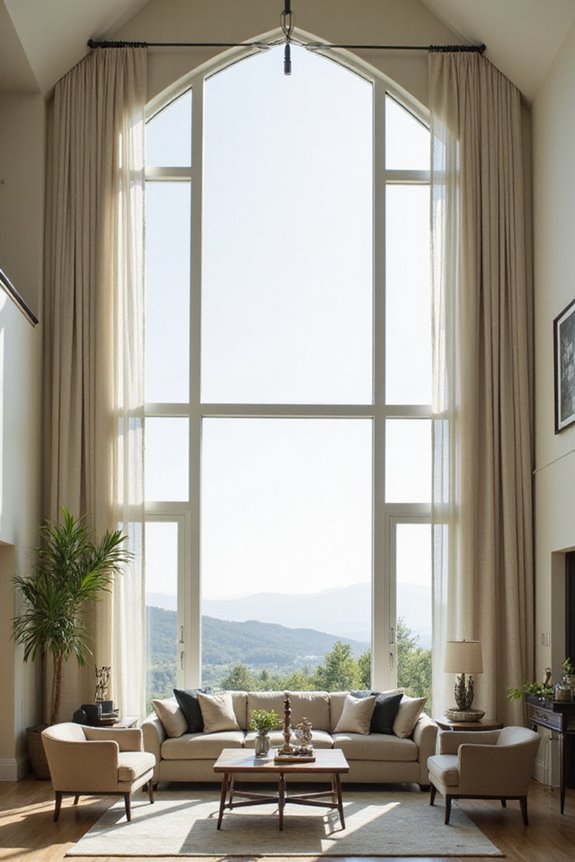
Using sheer fabrics alongside thicker materials gives us flexible light filtering. Sheers provide soft light and privacy during the day, while thicker layers can block out light completely.
Seasonal Window Treatment Changes
Updating our window treatments with the changing seasons can greatly improve both aesthetics and comfort in our homes. By incorporating seasonal styles and fabric choices, we can enhance our living spaces.
Spring and Fall: Light-filtering shades and billowy curtains work well, providing natural light and maintaining privacy.
Summer: Blackout and cellular shades are perfect for blocking sunlight, keeping our homes cool.
Winter: Thick fabrics and insulating blinds help retain warmth.
Layering Techniques: Combining lightweight sheers with heavier drapes promotes thermal regulation, maximizing comfort year-round.
With smart home integration, automated adjustments can optimize energy efficiency based on seasonal light variations. Emphasizing these seasonal window treatment changes allows us to balance style and functionality in our homes.
Maintenance and Care for DIY Window Treatments
Maintaining and caring for DIY window treatments is vital to keep them looking great and functioning well over time. Regular cleaning practices contribute to window treatment longevity. We should dust weekly with a feather duster or vacuum using a soft brush to prevent buildup. For spot cleaning, a damp cloth with mild detergent works well on stains without damaging fabric.
It’s also important to inspect cords and hardware annually for wear. In humid areas, using dehumidifiers can mitigate mold risks. Additionally, we should store treatments flat or rolled to maintain their shape. For materials like silk or delicate fabrics, consider professional cleaning every 18–24 months to guarantee thorough maintenance and preserve their beauty for years to come.
Frequently Asked Questions
How Do I Choose the Right Hardware for My Window Treatments?
To choose the right hardware for our window treatments, we’ll consider hardware types that complement our style combinations, ensuring durability and aesthetics. Let’s match finishes and sizes to our chosen curtain styles for a cohesive look.
What Tools Do I Need for DIY Window Treatments?
For DIY window treatments, we need measuring tools for accurate window dimensions, drill for installing brackets, a miter saw for cutting, and various adhesives for finishing touches. It’s all about precision and creativity!
Are There Temporary Window Treatment Options for Renters?
Absolutely, we’ve got creative temporary window treatment options for renters! Using tension rods and curtain clips, we can easily hang lightweight curtains, adding charm without ever leaving a mark on our beautiful walls. Let’s transform our space!
How Can I Coordinate Window Treatments With My Home Decor?
To coordinate window treatments with our home decor, we should consider color schemes and fabric patterns that match our room styles. Seasonal themes can also inspire fresh looks, creating a cohesive and inviting atmosphere throughout.
What Safety Measures Should I Consider for Window Treatments?
We should prioritize child safety by opting for cordless or motorized window treatments and selecting lightweight, durable fabric choices. Regularly inspecting and securely installing treatments helps guarantee a safer environment for our little ones.